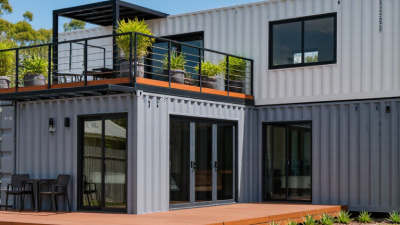
China Top 10 Cargo Container House Suppliers
China’s cargo container house sector has grown alongside the country’s manufacturing and logistics strengths. UNCTAD’s Review of Maritime Transport reports that global container ship capacity exceeded 28 million TEUs in 2023. This enormous circulation of standardized steel containers supports a broad reuse market. Yet reuse is not automatically sustainable. A converted container may require cutting, reinforcement, insulation, and careful corrosion treatment before becoming a safe living or working space.
This guide, China Top 10 Cargo Container House Suppliers, examines manufacturers through practical and verifiable criteria. These include factory experience, welding quality, material traceability, customization capability, delivery performance, and after-sales support. ISO 668 dimensional standards help maintain compatibility with common container handling systems. The World Bank’s Logistics Performance Index 2023 also emphasizes reliability, infrastructure, and shipment efficiency. These factors matter when suppliers deliver units across borders or to remote construction sites.
Details reveal more than attractive renderings. Buyers should inspect steel grades, corner-post conditions, floor loading, roof drainage, fire-resistant insulation, electrical certificates, and ventilation design. Ask for production photographs and inspection records. Better still, request a sample unit.
No supplier is perfect.
A catalog can hide limitations. Some factories excel at rapid production but offer weak architectural support. Others provide excellent design yet struggle with delivery schedules. This ranking therefore aims to support informed comparison, not make unsupported promises. Conditions, certifications, and product specifications can change, so buyers should verify current documents directly with each supplier before signing a contract.

What Are Cargo Container Houses and Why Choose Chinese Suppliers?
Cargo container houses are modular buildings adapted from ISO shipping containers, usually 20 or 40 feet long. Workers cut openings, reinforce frames, then add insulation, wiring, plumbing, windows, and fire-resistant finishes. The original steel box is strong, but it is not automatically a safe home. Moisture, thermal bridging, corrosion, and poor ventilation can create expensive problems.
Demand is linked to global logistics. UNCTAD’s Review of Maritime Transport reports that more than 80% of world merchandise trade moves by sea. This produces a large supply of used containers, while modular construction can shorten site work. China is also a major manufacturing base. World Steel Association data shows China produced about 1.01 billion tonnes of crude steel in 2024, over half of global output. That industrial depth can support competitive steel fabrication, standardized components, and large-volume production.
Chinese suppliers may offer practical advantages: factory quality checks, configurable floor plans, and export experience across different climates. However, low price should not decide the purchase. Ask for steel grades, welding records, insulation specifications, load calculations, and electrical test documents. Check whether the design meets local building, fire, and energy rules. Factory photos are useful, but independent inspections are stronger evidence. Some suppliers still underestimate condensation control. That detail matters. A container house can look finished while feeling damp inside. Experienced buyers should also inspect coatings, door seals, drainage, and transport protection before shipment.
China Top 10 Cargo Container House Suppliers: Common Container Formats
Cargo container houses are prefabricated buildings converted from ISO freight containers. Their modular structure, transportability, and standardized dimensions make them suitable for homes, offices, accommodation units, and temporary facilities.
How to read the chart: A 20-foot container typically provides about 13.9 m² of internal floor area, while a 40-foot container provides about 28.3 m². High-cube models offer similar floor space but greater internal height, creating more flexibility for insulation, lighting, ventilation, and residential interiors. The figures are approximate calculations based on commonly published ISO container internal dimensions; actual usable space varies with wall insulation, doors, windows, and fit-out design.
Key Criteria for Evaluating China’s Top Container House Manufacturers
China Top 10 Cargo Container House Suppliers
When comparing China’s top ten cargo container house suppliers, begin with manufacturing evidence, not attractive renderings. Request factory videos, welding records, steel grades, and recent inspection reports. A reliable supplier explains load paths, corrosion protection, insulation density, and fire performance in clear language. Ask for proof. If answers remain vague, treat the quotation carefully.
Visit completed projects if possible, or request dated photographs showing wall joints, roof edges, bathrooms, and utility connections. Small misalignments often reveal rushed fabrication. Compare quoted specifications with the delivered sample, including panel thickness, window seals, floor loading, and electrical components. Experienced teams should explain tolerances and replacement procedures before receiving a deposit. Delivery history matters: check packing methods, container dimensions, port handling, and installation guidance.
Evaluate communication after technical questions become difficult. Does the team record revisions, identify risks, and admit what requires local confirmation? That honesty builds trust. Still, no evaluation is perfect; photographs can be staged, and documents may be outdated. Use an independent inspector when the order is large. Review warranty scope, spare-part access, response times, and responsibility for defects. Choose the supplier whose evidence remains consistent from factory floor to final handover.
Profiles of the Top 10 Cargo Container House Suppliers in China
China’s top ten cargo container house suppliers differ in focus, scale, and technical depth. One specializes in compact site offices with insulated wall panels. Another produces larger modular homes for worker accommodation. A third focuses on rapid assembly and flat-pack transport. The fourth offers customized floor plans for schools and temporary facilities. The fifth is known for reinforced steel frames and high-wind designs. The sixth supplies foldable units for projects with limited storage space. The seventh develops container homes with improved daylight and ventilation. The eighth concentrates on sanitary units, kitchens, and service modules. The ninth supports export packaging and installation guidance. The tenth provides engineering consultation for complex site conditions.
A reliable profile should include more than product photographs. Check steel thickness, welding quality, coating methods, insulation values, and drainage details. Ask for factory inspection records and recent project references. Experienced suppliers should explain loading limits, fire-resistant materials, electrical protection, and local code coordination. Their answers should be specific. Vague promises deserve caution. Some suppliers may offer lower prices, but thinner panels or weaker fittings can create expensive repairs. Even experienced buyers can overlook foundation preparation. That mistake is common.
Tips:
Compare complete quotations, not unit prices. Request drawings before production. Confirm delivery terms, replacement procedures, and installation responsibilities in writing. Visit the factory when possible. A short inspection can reveal poor storage, uneven welding, or rushed finishing. Suppliers should also admit limitations. That honesty matters.
Product Types, Customization Options, and Manufacturing Capabilities
China’s top 10 cargo container house suppliers differ sharply in product depth and factory control. Standard units usually follow ISO 668 dimensions, including 20-foot and 40-foot footprints. They suit site offices, dormitories, clinics, cafés, and storage rooms. Expandable and flat-pack models offer faster installation, but their hinges, seals, and locking points need closer inspection.
Customization can include sandwich-panel thickness, fire-rated boards, insulated floors, wiring layouts, plumbing, windows, stairs, kitchens, and accessible bathrooms. The McKinsey report “Modular Construction: From Projects to Products” indicates that modular methods can reduce schedules by 20–50% under suitable conditions. That benefit is not automatic. Poor coordination between design and production can erase it. Suppliers with BIM files, sample approvals, and documented change control usually manage complex orders more reliably.
Manufacturing capability matters beyond factory size. Review cutting accuracy, welding procedures, coating systems, load testing, and final inspection records. The “2023 Global Modular Construction Market” report projects continued market growth, driven by housing shortages and faster project delivery. However, its broad market figures do not prove that every supplier can deliver durable container homes. Ask for moisture-test results, electrical certificates, packing plans, and photographs from completed projects. One practical warning: attractive renderings can hide weak ventilation and thermal bridging. A real factory audit is still better.