Containers in Motion

How to Buy Used Container Homes Worldwide in 2026?

Buying used container homes worldwide in 2026 requires more than comparing online prices. Buyers must examine the container’s history, structural condition, insulation, transport route, and local building requirements. A low price can hide expensive repairs, difficult port handling, or unsuitable dimensions.

Architect Adam Kalkin once described the shipping container as “a symbol of globalization.” That idea still matters. A used container home may travel across borders, but its design must respond to local weather, soil, utilities, and everyday habits. A home for coastal Portugal needs different corrosion protection than one for inland Canada. A tropical site may require shaded windows, raised flooring, and strong ventilation. Small details become large costs.

This guide explains how to find reliable suppliers, compare refurbished and modified units, request inspection records, and estimate delivery expenses in 2026. It also discusses certifications, warranties, foundation planning, and contractor communication. Buyers should ask for photographs of the underside, corner posts, roof, doors, and interior welds. Paint can hide problems. Sometimes, the cheapest unit is not the best unit.

There is no universal buying formula. A container that looks excellent in a catalog may perform poorly on your property. Local professionals should review structural changes, electrical systems, plumbing, and permits before payment. Independent inspection is worth the extra time. It can prevent an attractive purchase from becoming an unfinished project.

How to Buy Used Container Homes Worldwide in 2026?

Define Your Used Container Home Needs and 2026 Budget

How to Buy Used Container Homes Worldwide in 2026?

Define your needs before comparing prices. Decide whether you need one 20-foot unit or several connected modules. A standard 20-foot container offers roughly 14 square meters of internal floor area. ISO 668 dimensions help, but usable space decreases after insulation, wiring, and wall finishes. Measure your furniture first. It is a simple step, often skipped.

Set a realistic 2026 budget in separate layers. Include the container, inspection, transport, crane unloading, foundation, insulation, windows, plumbing, electrical work, permits, and local labor.

UNCTAD’s Review of Maritime Transport 2024 states that ships carry over 80% of global merchandise trade by volume.

That explains worldwide availability, but not predictable delivery costs. Distance, port congestion, and inland access can change the final price sharply. Reserve at least 15% for surprises. More may be sensible for remote sites.

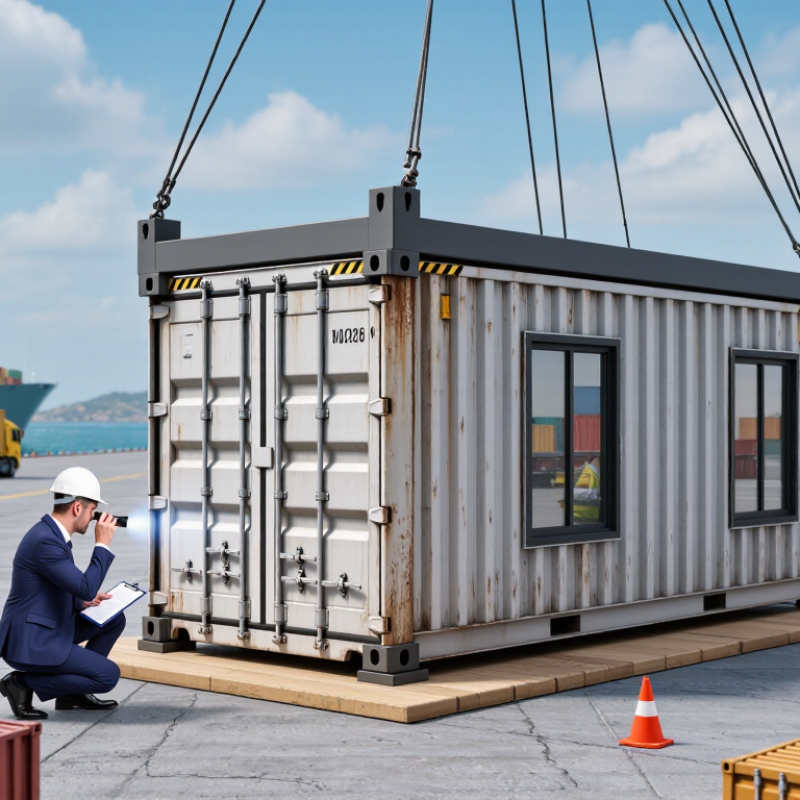
Do not treat a used container as a finished home. Inspect corner posts, the roof, floor chemicals, corrosion, and previous cargo history. Photographs are not enough. Hire an independent surveyor when possible.

The IEA and UNEP’s 2023 buildings report estimates that buildings produce about 26% of global energy-related emissions. Poor insulation can make a low purchase price expensive every month.

I would also question glossy renovation estimates; they often exclude foundations and local compliance. Your first budget will probably be wrong. Revise it after receiving three written logistics quotes and one local construction assessment.

Find Reliable Global Sellers and Verify Available Units

How to Buy Used Container Homes Worldwide in 2026?

Finding a reliable global seller requires more than comparing online prices. Ask for the seller’s legal business details, physical address, and recent customer references. Request the unit’s build year, previous use, dimensions, modifications, and maintenance records. A trustworthy seller should answer clearly and provide consistent documents.

Verify the actual unit before making payment. Request a live video inspection showing the exterior, interior, roof, floor, doors, windows, plumbing, and electrical systems. Ask the seller to display the identification number and today’s date during the call.

Check for rust around seams, water stains, soft flooring, damaged insulation, and unusual odors. Photos may hide problems. Even experienced buyers can miss structural corrosion without professional help. Hire an independent inspector near the unit when possible.

Confirm shipping measurements, loading access, and included equipment in writing. A low price may exclude transport, taxes, repairs, or installation.

Tips:

Compare at least three sellers. Never rely on edited photos alone. Request a signed invoice with every promised feature listed. Use secure payment procedures and avoid unexplained deposits. Check whether local authorities permit the home’s intended use, foundation, wiring, sanitation, and fire protection. Keep copies of messages, inspection reports, certificates, and shipping documents. If the seller pressures you to pay quickly, pause the deal. Availability can change, but verification should not.

Compare Container Types, Prices, Conditions, and Included Features

Buying a used container home in 2026 starts with comparing the shell, not the paint. A standard 20-foot unit suits a compact studio, while a 40-foot high-cube offers more ceiling height and usable storage. A refrigerated container provides stronger insulation, but its cooling system may need removal. UNCTAD’s Review of Maritime Transport 2024 reported 3.4% growth in the global fleet, which can improve availability in some ports. Freight rates and local shortages still change final prices quickly.

Typical international quotations range from US$1,500 to US$3,500 for a used wind-and-watertight 20-foot container. A one-trip unit may cost US$2,500 to US$5,000. Converted homes often exceed US$8,000 before transport, permits, foundations, and utility connections. These are market ranges, not fixed prices. Condition matters more than photographs. Check corrosion beneath the floor, door alignment, roof leaks, previous cargo history, and the CSC safety plate. A cheap shell can become expensive fast.

Included features require careful comparison. Confirm whether insulation, windows, wiring, plumbing, kitchen cabinets, bathroom fixtures, heating, cooling, and delivery are included. The World Bank’s Logistics Performance Index 2023 shows major differences in shipment reliability between markets. Ask for loading dimensions and a written delivery schedule. My own comparison mistake would be trusting a “fully finished” label without a component list. Small omissions matter. A professional inspection, moisture reading, and independent structural review are worth budgeting for before payment.

Arrange Inspections, Shipping, Customs, and Legal Documentation

How to Buy Used Container Homes Worldwide in 2026?

Buying a used container home requires more than checking photographs and a low price. Arrange an independent inspection before signing any purchase agreement. The inspector should examine corner posts, roof panels, floor framing, welds, corrosion, insulation, windows, plumbing, and electrical systems. Ask for moisture readings and clear photographs from every side. A clean-looking unit may still hide expensive structural repairs. That is an uncomfortable risk.

Shipping also needs careful planning. Confirm the container’s exact dimensions, weight, lifting points, and loading method. Request a written quotation covering ocean freight, port handling, inland transport, insurance, and possible storage charges. Check the delivery route before booking. Narrow roads, weak bridges, or limited crane access can delay installation. Customs paperwork should match the shipment precisely, including the commercial invoice, packing list, bill of lading, origin documents, and correct tariff classification. Duties and taxes vary by destination.

Tips: Use a local customs broker and an independent surveyor. Ask who pays demurrage, inspection fees, and unloading costs. Keep every document in one shared file. Before payment, verify land-use rules, building permits, fire safety requirements, energy standards, and utility approvals with the local authority. Regulations can change during a project. Do not assume a home legal in one country can be installed unchanged elsewhere. That assumption often becomes costly.

How to Buy Used Container Homes Worldwide in 2026? - Arrange Inspections, Shipping, Customs, and Legal Documentation

Purchase Dimension Typical 2026 Planning Data What to Verify Before Payment Required Evidence or Document Main Risk-Control Action
Container type Most converted homes use 20-foot or 40-foot ISO freight containers. External dimensions are approximately 6.06 m × 2.44 m × 2.59 m for a standard 20-foot unit and 12.19 m × 2.44 m × 2.59 m for a standard 40-foot unit. Confirm external and internal measurements, door position, floor height, ceiling height, and whether the unit is standard, high-cube, open-side, or otherwise modified. Manufacturer plate, dimensional drawing, photographs with measurement references, and a signed specification sheet. Do not rely on the nominal container size alone; insulation, wall finishes, plumbing, and furniture reduce usable floor area.
Structural condition A used container may have dents, corrosion, repaired corner posts, damaged flooring, or alterations that affect structural performance. Inspect corner posts, top and bottom rails, roof, floor, welds, cut-outs, lifting points, and areas around doors and windows. Independent inspection report, dated photographs, repair history, and a structural engineer’s opinion where major openings or stacking are involved. Use an independent inspector who is not financially connected with the seller or freight intermediary.
Material and contamination check Older units may contain chemical residues, treated timber, mold, pests, or unknown cargo contamination. Flooring and coatings may also require testing. Ask what cargo the container carried, inspect odors and stains, check flooring treatment, and determine whether remediation is required. Cargo-use declaration, cleaning certificate, pest-control certificate where applicable, and laboratory reports for suspected hazardous materials. Reject units with unexplained chemical odor, visible contamination, extensive mold, or undocumented hazardous-material exposure.
Building condition Conversion quality depends on insulation, vapor control, windows, doors, roof detailing, ventilation, waterproofing, and thermal-bridge treatment. Verify insulation type and thickness, U-values where available, water-tightness, condensation control, ventilation capacity, and fire-rated materials. As-built drawings, product data sheets, electrical and plumbing diagrams, waterproofing records, and completion photographs. Require a practical leak test and an inspection of concealed areas before the unit is packed or shipped.
Utilities and appliances Electrical systems, plugs, voltage, frequency, water fittings, drainage, heating, cooling, and appliances must match the destination country. Check rated voltage and frequency, circuit protection, earthing, residual-current protection, pipe sizes, drainage outlets, and appliance operating condition. Electrical test certificate, wiring diagram, appliance list, commissioning checklist, and serial-number photographs. Budget for local rewiring or replacement if the system does not satisfy destination electrical and plumbing codes.
Inspection arrangement A pre-purchase inspection should occur before the final balance and before loading. A remote video inspection is useful but does not replace an independent physical inspection. Use a written checklist covering structure, moisture, utilities, fixtures, dimensions, packaging, and visible defects. Signed inspection report with date, location, meter readings, defect photos, and a clear pass, conditional-pass, or fail result. Link payment milestones to inspection approval and documented correction of agreed defects.
Shipping configuration A complete 20-foot unit may fit one standard container only if the home is designed for transport. A complete 40-foot unit may require special handling, open-top transport, flat-rack transport, or break-bulk arrangements. Confirm packed dimensions, gross weight, lifting points, center of gravity, lashing plan, and whether the unit can pass port and road clearance limits. Packing list, verified gross mass, lifting plan, cargo-securing plan, transport dimensions, and loading photographs. Obtain a door-to-door logistics quotation that separately identifies origin, ocean, destination, terminal, storage, demurrage, and inland-delivery charges.
Indicative transit planning Ocean movement commonly requires several weeks, while door-to-door delivery can take roughly 6–12 weeks depending on origin, destination, transshipment, port congestion, customs, and inland access. Confirm sailing schedule, cut-off date, transshipment points, free storage period, seasonal congestion, and final-mile access. Booking confirmation, bill of lading instructions, cargo insurance certificate, and a written delivery schedule. Treat transit times as estimates rather than guarantees and keep contingency funds for storage, port handling, and re-delivery.
Customs classification A converted container may be classified differently from an empty steel freight container because it can contain fixtures, appliances, building materials, and completed residential components. Confirm the destination tariff classification with a licensed customs broker before shipment, including whether separate classifications apply to bundled contents. Commercial invoice, packing list, bill of lading, country-of-origin statement, valuation evidence, and customs power of attorney. Do not use an unverified tariff code supplied only by the seller; duty and tax treatment depends on the destination jurisdiction.
Import charges The landed cost may include purchase price, export handling, freight, insurance, import duty, value-added or sales tax, port fees, customs brokerage, storage, inspection, inland transport, crane service, and foundation work. Request a written landed-cost estimate based on the actual destination, declared value, dimensions, weight, and delivery address. Broker quotation, tax calculation, port fee schedule, delivery quotation, and payment receipts. Keep a contingency reserve because customs valuation, inspections, storage, and local delivery conditions can change the final cost.
Planning and zoning approval A container home is commonly regulated as a building or dwelling once placed on land, even if it was manufactured or transported as cargo. Confirm land-use permission, setbacks, foundation requirements, access, utility connections, flood or fire restrictions, and whether temporary placement is permitted. Planning confirmation, zoning approval, site plan, survey, soil or foundation information, and utility-connection approvals. Obtain written confirmation from the local authority before ordering; transportability does not guarantee legal habitability.
Building-code compliance Compliance may cover structural loads, fire safety, emergency escape, insulation, ventilation, accessibility, electrical safety, plumbing, sanitation, energy performance, and weather resistance. Have a local architect, engineer, or building-control professional review the design before purchase and identify required modifications. Engineering calculations, fire and material certificates, electrical test results, energy information, plumbing drawings, and local compliance statement. Separate the seller’s manufacturing warranty from the destination authority’s approval; they are not equivalent.
Contract and payment protection The contract should define the exact unit, condition, inclusions, delivery term, inspection rights, correction obligations, ownership transfer, insurance responsibility, and cancellation terms. Match the contract description to the inspection report, photographs, packing list, invoice, and transport booking. Signed sales contract, pro forma invoice, payment schedule, warranty terms, defect-resolution clause, and dispute-resolution clause. Avoid full upfront payment before inspection, document verification, and confirmation that the unit is ready for loading.
Final delivery and installation Installation may require a crane, suitable road access, prepared foundations, utility connections, anchoring, leveling, weather sealing, and local inspections. Check turning radius, bridge and road limits, overhead cables, crane reach, ground bearing capacity, foundation dimensions, and installation sequence. Site-access survey, foundation drawings, installation method statement, delivery condition report, and final inspection certificate. Photograph the unit at unloading and record damage immediately on the carrier’s delivery document before signing acceptance.

Planning note: Freight times, customs classification, taxes, permits, and building requirements vary by route and jurisdiction. Confirm current requirements with the destination customs authority, licensed customs broker, carrier, and local building professional before purchase.

Plan Site Preparation, Installation, Utilities, and Final Compliance

Buying a used container home worldwide in 2026 requires more than finding a low purchase price. Inspect the steel frame, corner posts, roof, floor, doors, and welds before shipment. Surface rust may be manageable, but deep corrosion can threaten structural safety. Request modification records, treatment history, dimensions, and transport documents. A local surveyor should verify the unit before payment.

Prepare the site before the container arrives. Confirm soil bearing capacity, drainage, access width, and crane placement. A level foundation may use concrete pads, piers, or a reinforced slab, depending on local engineering advice. Leave clearance around walls for inspection and maintenance. Installation can fail through small oversights. A narrow gate or soft driveway may create expensive delays.

Tips: Draw a utility plan before cutting openings. Mark water, electricity, ventilation, and waste routes clearly. Use licensed local professionals for connections and structural changes. Check insulation performance for the local climate, especially around the roof and floor. Arrange fire protection, emergency access, and final inspections according to local requirements. Do not assume a container approved in one country will meet another jurisdiction’s rules. Keep invoices, engineering drawings, inspection reports, and photographs in one project file. I would also budget for surprises, because older units often hide moisture damage beneath finished panels.