What Are the Top Outdoor Post Lights?
Choosing the best Outdoor Post Lights involves more than comparing attractive designs. A reliable fixture should improve visibility, withstand changing weather, and complement the surrounding property. It should also provide comfortable illumination without creating harsh glare across walkways or driveways.
This guide examines popular post-light styles, including traditional lanterns, modern LED fixtures, solar models, and motion-sensor options. Each type serves a different purpose. LED lights usually offer efficient operation and consistent brightness. Solar lights can simplify installation, but their performance depends on sunlight and battery quality. Weather-resistant construction matters, especially for posts exposed to rain, snow, dust, and coastal air.
We will compare brightness, color temperature, materials, energy use, installation demands, and long-term maintenance. Practical details matter here. A warm 2700K light may suit a garden path, while a brighter neutral tone can improve driveway visibility. Rust-resistant aluminum looks practical, but heavier metal construction may feel more substantial. That does not guarantee better performance.
There is no perfect fixture. Some attractive models have weak light distribution. Some efficient options look too plain for a formal entrance. In my view, the strongest choice balances safety, appearance, durability, and operating cost. This overview will help homeowners assess those trade-offs with clearer expectations. It will also point out common weaknesses, because outdoor lighting often performs differently after installation than it appears in product photographs.
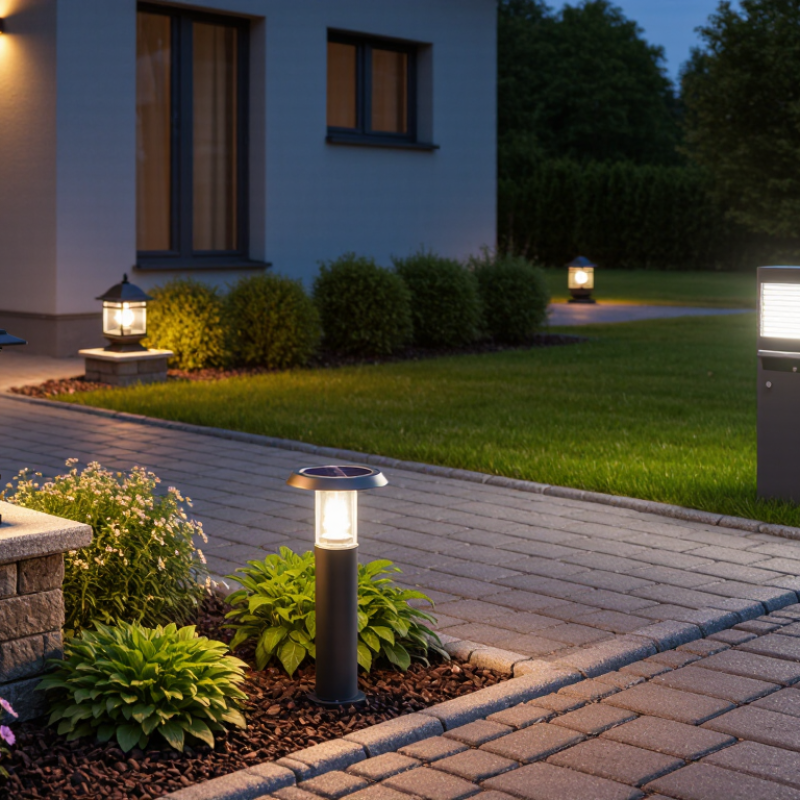
Types of Outdoor Post Lights and Their Main Uses
What Are the Top Outdoor Post Lights?
Outdoor post lights combine visibility, security, and landscape character. Their best type depends on the location and power access. Wired low-voltage post lights suit driveways, walkways, and garden borders. They provide steady brightness and usually work well with timers. Line-voltage models deliver stronger output for large entrances or commercial-style paths. However, installation needs careful electrical planning.
Solar post lights work well in sunny yards without nearby wiring. Their performance can drop after cloudy days or when panels face shade.
LED post lights are efficient choices for frequent nighttime use. The International Energy Agency reports that lighting consumes about 15% of global electricity. This makes efficient outdoor lighting a practical design concern, not just a trend.
Motion-sensor and smart post lights fit security-focused areas. They activate only when movement occurs, although false triggers can become annoying.
Decorative lantern-style fixtures add warmth around patios and gates. Bollard-style post lights offer lower, wider illumination for steps and pathways.
Grand View Research has projected strong growth for the global outdoor lighting market, with efficiency and connected controls helping drive demand.
Tips: Match light output to the task, not the fixture’s appearance. Check the IP rating for rain and dust exposure. Use shielded optics near bedrooms and neighboring properties. Keep solar panels free from leaves. I once assumed brighter always meant safer; glare proved otherwise. Test the spacing at night before fixing every post. It is easy to over-light a small garden.
Key Features That Define a High-Quality Outdoor Post Light
What Are the Top Outdoor Post Lights?
A high-quality outdoor post light should provide dependable illumination through changing weather. Look for a strong aluminum, stainless steel, or treated metal housing. These materials resist moisture, wind, and surface corrosion better than thin decorative shells. A sealed design also helps protect internal wiring and LEDs. Check the IP rating before installation. Higher ratings usually offer better protection from dust and water.
Brightness matters, but excessive brightness can create glare. For pathways, moderate illumination often feels safer and more comfortable. Warm white light, around 2700K to 3000K, creates a welcoming appearance. Neutral white may reveal steps and edges more clearly. Choose according to the location. A built-in photocell or timer can switch the light on automatically at dusk. Motion sensors are useful near gates, although they may react to passing animals.
I have found that mounting stability is easy to underestimate. A loose base can tilt after heavy rain or strong wind. Use a level surface, suitable anchors, and weather-resistant connections. The diffuser should distribute light evenly without obvious dark patches. Easy access to the LED module or bulb simplifies future maintenance. Some fixtures promise maintenance-free operation, but dust still collects inside outdoor spaces. Inspect the seal and mounting screws occasionally. A small flaw can become expensive later.
Installation, Placement, and Wiring Considerations
The best outdoor post lights balance visibility, weather resistance, and manageable installation. LED models are usually the practical choice. The U.S. Department of Energy reports that LEDs use at least 75% less energy and last up to 25 times longer than incandescent lamps. Choose fixtures listed for wet locations, not merely damp locations. Check the label carefully. A sealed housing, corrosion-resistant finish, and shielded lens matter near sprinklers, snow, and coastal air.
Placement should guide movement without creating glare. Set posts beside walkways, driveways, gates, or steps, while keeping light away from bedroom windows and neighboring properties. A common mistake is installing lights in a perfectly straight line. Slightly varied spacing often feels more natural, but stair edges need consistent illumination. The Illuminating Engineering Society recommends designing for safe visual transitions, not maximum brightness. In practice, test one temporary fixture at night. Daylight hides poor placement.
Wiring demands more caution than fixture selection. Follow the current local electrical code and the manufacturer’s instructions. The National Electrical Code requires protection measures for outdoor circuits, while the Electrical Safety Foundation International recommends GFCI protection for outdoor electrical equipment. Use direct-burial cable or approved conduit, maintain the required burial depth, and keep connections inside rated, weatherproof boxes. A licensed electrician should verify the circuit, grounding, and voltage drop. Low-voltage systems seem simple. They still fail when cable runs are too long or connectors remain above wet soil. I have found that planning the cable route before digging prevents costly rework, although even careful plans sometimes miss hidden drainage lines.
Maintenance, Safety, and Energy Efficiency Factors
What Are the Top Outdoor Post Lights?
Top outdoor post lights should balance dependable construction, safe installation, and efficient performance. A sealed housing helps block rain, dust, and insects. Look for corrosion-resistant materials, secure fasteners, and a lens that will not yellow quickly. During maintenance, switch off the power before cleaning. Wipe away dirt with a soft cloth, then inspect the gasket and cable entry. Small cracks can invite moisture. They are easy to miss.
Safety deserves careful attention around walkways, driveways, and steps. The post should stand firmly in compacted soil or a suitable concrete base. Keep the fixture clear of branches, stored tools, and sprinklers. Use outdoor-rated wiring and residual-current protection where local rules require it. A licensed electrician should handle unfamiliar connections. I once assumed a flickering lamp needed a new bulb, but a loose connection caused the problem. That mistake changed my inspection routine.
Energy efficiency depends on more than low wattage. Choose an LED light with useful brightness, not excessive glare. Warm light around 2700K to 3000K usually supports comfortable visibility and reduces the harsh appearance of a yard. A timer, photocell, or motion sensor can prevent hours of unnecessary operation. Shielded designs direct light downward and reduce wasted spill. Still, sensors can react poorly to pets or passing cars. Test the settings at night, and adjust them again after seasonal changes.


