Top WPC 3D Wall Panel Manufacturers in China
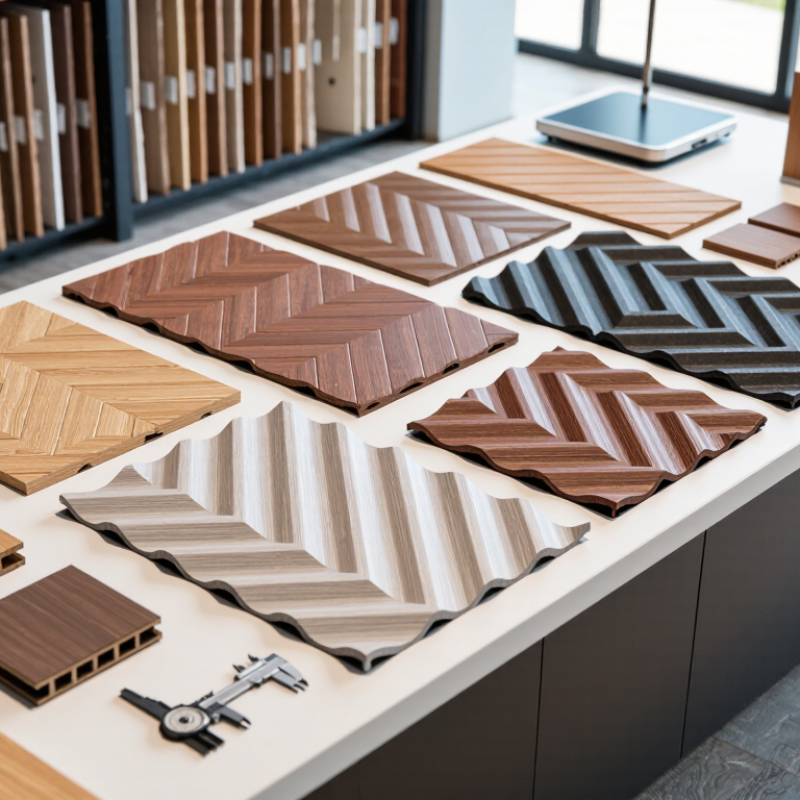
China has a broad range of manufacturers producing Wpc 3d Wall Panel products for homes, hotels, offices, and retail spaces. Their catalogs may show crisp geometric patterns and warm wood-like finishes, but a photograph cannot reveal everything. Surface texture, panel weight, edge quality, and color consistency become clearer when you inspect a physical sample.
This guide introduces leading Chinese manufacturers and the factors buyers can use to compare them. It considers product variety, customization options, material information, production capacity, quality checks, and communication during sampling and ordering. Small details matter. A clean panel edge, a secure packing method, or a clearly stated installation requirement can make a real difference on site. Ask suppliers about panel dimensions, thickness, core composition, finish durability, and care instructions. Request current specifications rather than relying only on a catalog image.
A supplier’s claims deserve thoughtful review. Product certificates, factory descriptions, and project photos can help, but buyers should check that the documents match the specific product under consideration. A sample may also look different under warm showroom lights than beside a window at home. That is worth remembering. The manufacturers discussed here offer a starting point, not a guarantee that one supplier fits every project. Compare samples, confirm practical details in writing, and allow time for questions. Some information may remain incomplete, so careful verification is part of choosing well.
What WPC 3D Wall Panels Are and How They Are Made
WPC 3D wall panels combine wood-based material with thermoplastic polymer to create decorative wall cladding. The wood component is commonly supplied as fine flour or fibers, while the polymer binds the mixture. Additives may improve color stability, processing, or resistance to moisture. Exact recipes vary, so panel density and surface feel can differ between products.
During production, the ingredients are blended and heated until they form a workable composite. The material is then pressed or extruded through a shaped tool, which creates grooves, ridges, or wood-grain textures. Cooling helps the panel retain its profile. It is cut to length, and the surface may receive embossing, brushing, or a protective finish. Details matter. Uneven cooling or mixing can affect appearance and dimensions.
Unlike solid wood, WPC panels are manufactured for more consistent profiles, but they are not immune to heat or installation errors. Leave suitable expansion space, especially where temperatures fluctuate. A sample viewed in daylight can reveal color and texture more accurately than a screen image. The raised pattern may look striking, though dust can collect in deeper grooves. That trade-off is easy to overlook.
Top WPC 3D Wall Panel Manufacturers in China – What WPC 3D Wall Panels Are and How They Are Made
| Topic | Materials or production stage | What it means for the panel |
| What WPC means | Wood-plastic composite (WPC) combines wood-based material, such as wood flour or wood fiber, with a thermoplastic polymer. | The exact formulation varies by product. Common polymer choices include PVC, polyethylene (PE), and polypropylene (PP). |
| Three-dimensional design | Raised ribs, grooves, flutes, or other shaped details are formed in the panel profile or surface. | The relief creates visible texture and depth. Panel shape, dimensions, and surface pattern depend on the product design and tooling. |
| Formulation and blending | Wood-based filler and polymer are blended with selected processing additives. Formulations differ between manufacturers and polymer systems. | Material selection affects processing and finished-panel characteristics. A product specification should identify its material system rather than assume one standard recipe. |
| Profile extrusion | The blended material is heated and pushed through a shaped die in an extrusion process. | The die defines the panel’s cross-sectional profile, including features such as channels or ribs. Extrusion is a common method for making continuous WPC profiles. |
| Shaping and cooling | After leaving the die, the profile is shaped and cooled so it can retain its form. | Calibration and cooling equipment are used according to the production line and profile design; specific settings are product-dependent. |
| Surface finish | Finishing may include texturing, embossing, brushing, or applying a surface layer, depending on the product. | These options can change the panel’s appearance and feel. Not every WPC 3D panel uses the same finish or surface treatment. |
| Cutting and inspection | Continuous profiles are cut to specified lengths and checked against the manufacturer’s quality requirements. | Buyers can request product-specific details such as dimensions, tolerances, composition, test methods, and installation instructions. |
| Typical applications | Interior decorative wall finishes in settings such as homes, offices, retail spaces, and hospitality interiors. | Suitability depends on the product’s stated use and installation conditions. Indoor panels should not be assumed suitable for exterior or wet-area use without supporting specifications. |
| Comparing manufacturers in China | Compare documented product specifications, available profiles and finishes, production quality controls, sample consistency, and export packaging. | Capabilities and product properties vary between manufacturers. Request current technical documents and samples for the specific panel being considered. |
Note: WPC panel composition, profile design, surface finish, and performance vary by product. Confirm the relevant specifications with the manufacturer before purchase or installation.
How to Evaluate WPC 3D Wall Panel Manufacturers in China
Evaluating a WPC 3D wall panel manufacturer in China starts with the product, not a catalogue image. Request a physical sample and inspect its surface under side lighting. This reveals uneven relief, pinholes, color variation, and sharp edges. Ask for the panel’s core composition, thickness tolerance, density, and installation guidance in writing. Details matter.
A capable supplier should explain how panels perform in your expected conditions, including indoor humidity, temperature changes, and routine cleaning. Ask whether test reports cover relevant properties such as dimensional stability, fire behavior, and emissions. Then verify that the product specifications match the reports. Do not treat one certificate as proof for every model. Check batch consistency by comparing samples from separate production runs, if available. This step can feel slow, but it may prevent costly fitting problems.
Review manufacturing capacity through a live factory walk-through or dated production evidence, rather than relying only on polished photos. Confirm minimum order quantities, lead times, packaging, spare-panel availability, and how damaged goods are handled. Ask for references from projects using similar panel sizes and fixing systems. Ask for proof. Vague promises deserve follow-up. A lower quote can hide thinner panels or weak packaging, though price alone proves little. Record your criteria and score each supplier consistently. Choose the manufacturer whose claims remain measurable after delivery.
Top WPC 3D Wall Panel Manufacturers in China
How to Evaluate a Manufacturer
Suggested buyer scorecard allocation (%)
These suggested weights are a practical comparison framework, not published industry statistics. Check certificates and test reports for the exact panel product, verify quality-control records, and confirm production capacity, customization options, and delivery commitments.
Profiles of Leading WPC 3D Wall Panel Manufacturers in China
China’s leading WPC 3D wall panel manufacturers often differ more in production focus than in appearance. Some run integrated lines, handling material blending, extrusion, embossing, and finishing in one facility. This setup can make surface texture and color more consistent across repeat orders. A factory visit may reveal practical details: clean storage for additives, labeled batches, and panels checked under side lighting. Small marks show up quickly on raised patterns.
Other manufacturers focus on export orders and offer broad collections, custom lengths, and coordinated trim pieces. Their strength may be responsive sampling and packaging suited to long-distance shipping. Ask for samples from actual production, not only display boards. Check the panel’s weight, edge finish, and fit with matching corners. Details matter. A polished brochure tells you little about how a batch performs.
A third group emphasizes product development, testing different core blends and embossing depths for interior applications. Request clear specifications for dimensions, installation method, and cleaning guidance. Reliable suppliers should explain what their panels can and cannot handle, including exposure to moisture and heat. No factory is perfect. Even a strong supplier may have uneven lead times or limited pattern choices, so compare written specifications and sample batches before committing.
Products, Customization Options, and Quality Standards
Top WPC 3D Wall Panel Manufacturers in China: Products, Customization Options, and Quality Standards
WPC 3D wall panels combine wood fibers and polymer resin, but formulations vary by supplier. Common designs include fluted slats, geometric reliefs, and stone-like textures. A panel’s depth affects both its shadow pattern and how easily dust collects in grooves. Small details matter.
Customization may cover panel width, length, surface color, embossing, and edge profiles. Some factories can match a reference sample or produce project-specific molds. Ask for a physical sample under the lighting planned for the room; screen colors can be misleading. Custom finishes may also extend production time, so confirm lead times before approving drawings.
Quality checks should go beyond appearance. Review product specifications, dimensional tolerances, installation guidance, and test reports relevant to the intended setting. For projects with fire-performance requirements, request documentation for the exact panel construction and applicable local criteria. Check color consistency across multiple pieces, and inspect corners for chips or uneven extrusion. A polished sample is not the whole story. Batch variation can happen, and it deserves discussion before an order is placed.
How to Choose a Manufacturer for Your Project
Top WPC 3D Wall Panel Manufacturers in China
How to Choose a Manufacturer for Your Project
A suitable manufacturer should match your project’s use, not just its preferred product range. Share the wall dimensions, room conditions, installation method, and target finish before requesting a quotation. For a damp interior, ask how the panel handles moisture and cleaning. For a feature wall, check whether the 3D profile casts the shadows you want under your actual lighting. Small details matter.
Request physical samples and compare their thickness, surface texture, color, and edge finish. Then ask for product specifications, test information relevant to your application, and clear guidance on fixing and cutting. Confirm whether production can keep dimensions and color consistent across your full order. A sample can look perfect, yet a large batch may reveal variation. That risk deserves a direct conversation.
Check packaging details, production lead times, replacement-piece availability, and how the supplier handles defects. Ask for photos or references from projects with similar panel sizes and installation conditions. Communication is part of quality: unanswered questions before ordering may become bigger problems later. Do not choose on price alone. I would also leave room for a small trial order, if timing and budget allow; it may not expose every issue, but it can reveal a few.


