Top 10 Spray Drying Equipment Manufacturers Worldwide 2026
Spray Drying Equipment has become essential for producing consistent powders in food, pharmaceuticals, chemicals, ceramics, and advanced materials. This 2026 guide examines ten leading manufacturers worldwide. It considers engineering experience, atomization systems, drying efficiency, product recovery, automation, and after-sales support. A machine may look impressive in a showroom. Its real value appears during long production runs, where nozzle wear, wall deposits, and moisture variation become visible.
Arun S. Mujumdar, a widely recognized drying-technology expert, described the process clearly: “Spray drying is a process in which a liquid feed is transformed into a dried powder by spraying it into a hot drying medium.” That simple explanation still matters. Modern systems add precise temperature control, closed-loop monitoring, hygienic construction, and energy-saving heat recovery. Yet complexity does not automatically mean better performance. Operators still need practical training, reliable cleaning routines, and process data from actual production conditions.
This comparison focuses on manufacturers with strong technical capabilities and international market experience. It also considers customization, validation support, maintenance access, and documented operating results. No ranking is flawless. Public information varies between companies, and performance depends heavily on feed properties, plant design, and operator decisions. A compact laboratory unit may outperform a larger system for early product development. Conversely, a high-capacity plant demands stable airflow, dependable atomization, and carefully managed powder collection. The following manufacturers deserve attention, but buyers should test each claim against their own material, output target, and facility constraints.
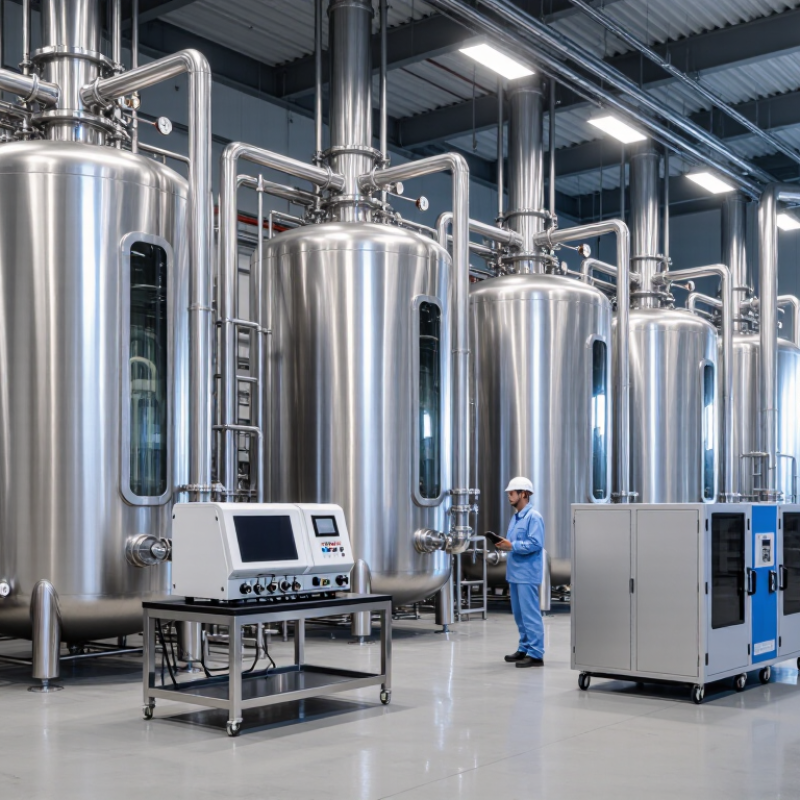
What Spray Drying Equipment Is and How It Works
Spray drying turns a liquid feed into a free-flowing powder within seconds. A pump sends the feed through a nozzle or rotary atomizer. Hot air then meets tiny droplets inside a drying chamber. Water evaporates rapidly, while solid particles move toward the collection system.
Temperature is not the only control. Operators monitor inlet air, outlet air, feed rate, atomization pressure, and powder moisture. A 2024 MarketsandMarkets report projected steady growth for the global spray drying equipment market, with food, dairy, pharmaceutical, and chemical applications driving demand. Engineering literature commonly places spray drying energy use near 1.2–2.0 kilowatt-hours per kilogram of evaporated water, depending on feed concentration and heat recovery. Real plants may perform differently.
Particle size matters. A narrow distribution improves filling, mixing, and dissolution. Hygienic designs also reduce powder buildup around the chamber wall. In practice, the first trial is rarely perfect. Small changes can alter bulk density dramatically.
Tips: Start with feed solids, not only air temperature. Measure moisture at several points during production. Check filters and cyclone pressure daily. Leave room for imperfect data; sensor drift happens. A lower outlet temperature may protect heat-sensitive ingredients, but it can also leave sticky powder. Pilot testing remains essential.
Top 10 Spray Drying Equipment Manufacturers Worldwide 2026
Typical Spray Drying Operating Temperatures by Product Category
Spray drying converts a liquid feed into a dry powder by atomizing it into a stream of heated air. Inlet temperature controls the drying intensity, while outlet temperature is more closely related to final moisture and product thermal exposure. The values shown are representative industrial operating points commonly used for these product categories; actual settings depend on feed composition, atomizer design, solids content, and required powder properties.
How the Top 10 Manufacturers Were Selected for 2026
How the Top 10 Manufacturers Were Selected for 2026
The 2026 selection uses evidence available through December 2025. Market size alone was not enough. MarketsandMarkets projects the global spray drying equipment market to grow steadily through 2028, driven by food, pharmaceutical, and chemical applications. That growth increases competition, but it does not prove manufacturing quality.
The review examined documented installations, drying chamber design, feed capacity, energy controls, and particle-size consistency. Public technical data mattered. So did validation records, factory testing, operator training, spare-parts access, and regional service coverage.
Reports from Grand View Research identify energy efficiency and automation as important market trends. Therefore, systems with heat recovery, closed-loop controls, and real-time moisture monitoring received stronger consideration.
Evidence was compared across independent reports, technical papers, customer case studies, and regulatory guidance. No brand received credit for advertising language alone. A manufacturer needed repeatable performance, transparent specifications, and credible after-sales support. Small details mattered, such as cleaning access, nozzle replacement time, and the clarity of operating manuals.
The method is not perfect. Public disclosures vary widely between manufacturers, making direct comparisons difficult. Some strong suppliers may appear lower because their data is limited. That weakness deserves attention. The final list therefore reflects verifiable market presence and technical reliability, not an absolute laboratory ranking.
Profiles of the Ten Leading Global Spray Dryer Manufacturers
Top 10 Spray Drying Equipment Manufacturers Worldwide 2026
This review profiles ten leading global spray dryer manufacturers through engineering capability, application experience, and service reliability. Their systems serve dairy, nutrition, chemicals, ceramics, and specialty materials production. Market reports from Grand View Research and MarketsandMarkets forecast steady growth for spray drying equipment through 2029. Reported growth estimates generally range between 5% and 8% annually. The figures differ because each study uses different product boundaries.
The strongest manufacturers offer more than a drying chamber. They engineer atomization systems, air filtration, heat recovery, and powder collection as one process. Several profiles emphasize hygienic designs with clean-in-place systems and controlled airflow. Others focus on laboratory units, pilot plants, or high-throughput industrial towers. A practical comparison should examine evaporation capacity, outlet temperature control, energy consumption, and validated powder quality. Scale matters. A compact pilot dryer may reveal performance problems before a factory invests in a large tower.
Experience remains visible in small details, including nozzle access, inspection windows, and maintenance time. Independent testing also matters, especially for heat-sensitive powders and narrow particle-size specifications. A ranking can still mislead when published data relies on vendor claims. Buyers should request operating references, test results, and lifecycle-cost calculations. The U.S. Department of Energy has repeatedly identified thermal processing as an important industrial energy-saving opportunity. That makes heat integration increasingly important in 2026. Some manufacturers appear technically similar on paper, yet their commissioning support may differ sharply. Validation matters more.
Key Technologies, Applications, and Industry Sectors
Spray drying equipment is becoming a precision platform, not merely a powder-making machine. MarketsandMarkets estimates the global spray drying equipment market could grow from about USD 5.2 billion in 2023 to USD 7.4 billion by 2028. This growth reflects demand for stable powders, cleaner processing, and flexible production lines.
The leading ten manufacturers compete through atomization control, energy recovery, and automated moisture monitoring. Two-fluid nozzles suit smaller particles and heat-sensitive formulations. Rotary atomizers support higher throughput. Fluidized-bed systems improve particle conditioning after drying. Closed-loop designs can reduce oxygen exposure and solvent emissions. In a pharmaceutical plant, inline sensors may monitor outlet temperature every second. A food processor may target powder moisture below 4% for longer shelf stability.
Applications differ sharply by sector. Dairy plants need gentle handling and consistent bulk density. Pharmaceutical facilities require validated cleaning and precise residence times. Chemical producers often prioritize corrosion resistance and solvent recovery. Grand View Research reports that food and beverage remain major users, while pharmaceutical demand is expanding through advanced formulation needs. Ceramic and industrial mineral producers also use spray drying to create uniform granules.
Rankings can mislead. A large chamber is not automatically efficient. Poor feed preparation can create wall deposits, burnt particles, or unstable yields. My practical view is cautious: energy data, cleaning records, and lifecycle service matter more than impressive brochures. Industry reports provide direction, but real performance still depends on the product, operator skill, and local process conditions.


