Containers in Motion

China Top 10 Home Audio Intercom System Manufacturers

Choosing a Home Audio Intercom System is no longer only about hearing a voice between rooms. It involves clarity, privacy, installation quality, network stability, and everyday convenience. A weak microphone can make a simple message sound distant. Poor speaker placement can create echoes in hallways and kitchens.

This guide examines China’s top 10 Home Audio Intercom System manufacturers through practical purchasing criteria. These include product engineering, acoustic performance, customization ability, manufacturing experience, testing procedures, and after-sales support. The review also considers systems used in villas, apartments, offices, schools, and healthcare environments. Some manufacturers focus on elegant indoor stations. Others offer stronger integration with video doorbells, smart-home controls, or building management platforms.

Dr. Floyd Toole, a respected loudspeaker researcher, offers a useful reminder: “The room is part of the system.” That principle applies directly to intercom design. A technically impressive unit may still perform poorly beside a refrigerator, inside a reflective corridor, or behind thick doors. Real installation experience matters. So does honest documentation.

Not every manufacturer will suit every project. That is the uncomfortable part. A low price may hide limited support, while a premium specification may exceed practical needs. Readers should verify certifications, warranty terms, software compatibility, and replacement-part availability before ordering. Supplier claims also deserve independent checking. This ranking is intended as a focused starting point, not a substitute for site testing. The best Home Audio Intercom System is the one that remains clear, dependable, and simple after installation.
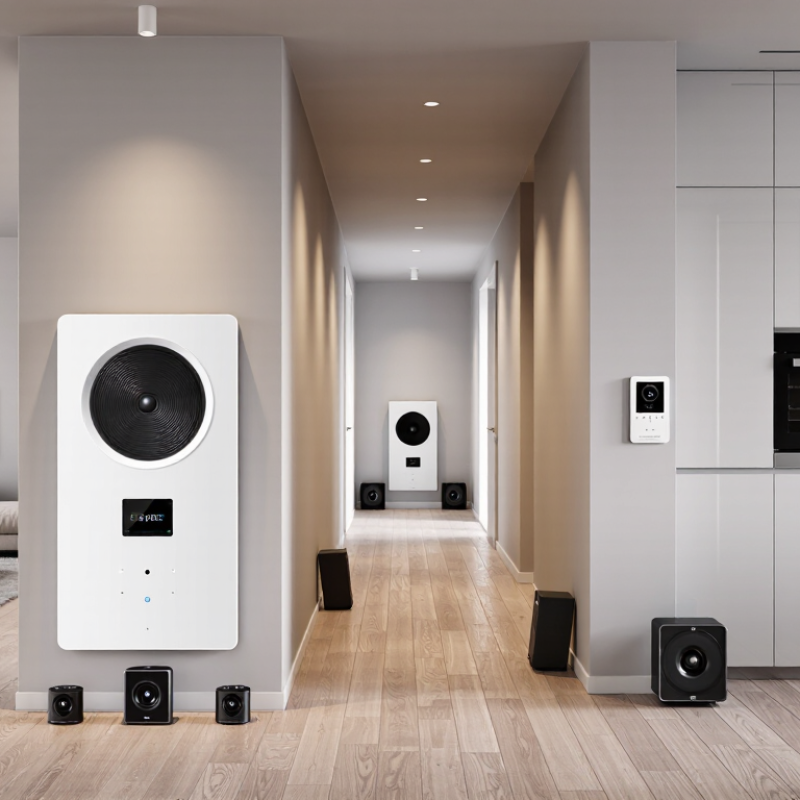
China Top 10 Home Audio Intercom System Manufacturers

Industry Scope: China’s Home Audio Intercom Market and 2-Wire/IP Systems

China Top 10 Home Audio Intercom System Manufacturers

China’s home audio intercom market serves apartments, villas, student housing, and assisted-living buildings. Demand is moving beyond simple door calls. Residents now expect clearer audio, remote unlocking, and dependable visitor records. In a typical apartment block, the indoor handset may sit beside the entrance, while the outdoor panel faces dust, rain, and heavy daily use.

Two-wire systems remain practical for many renovation projects. One cable pair can carry power and audio, reducing wall damage and installation time. This design suits older buildings with limited conduit space. However, installers must check voltage loss, cable quality, and distance before selecting equipment. Weak wiring can create humming, delayed speech, or intermittent calls. These faults are easy to underestimate.

IP systems offer greater flexibility. They can connect with local networks, management software, mobile devices, and security cameras. Power over Ethernet may simplify deployment, but network planning becomes essential. Technicians should separate intercom traffic from busy office networks where possible. They also need access controls, firmware updates, and secure user permissions. Experience from active projects shows that specifications alone cannot guarantee smooth operation. Some systems perform well in testing but respond slowly after real network congestion. Manufacturers should provide clear wiring diagrams, acoustic test data, replacement policies, and installation training. Buyers should compare total lifecycle cost, not only the purchase price.

Selection Metrics: Ranking 10 Manufacturers Across 5 Technical and Business KPIs

China Top 10 Home Audio Intercom System Manufacturers

Ranking ten manufacturers requires more than comparing product brochures. Our evaluation uses five practical KPIs: audio clarity, connection reliability, installation flexibility, after-sales support, and total ownership cost. Each area receives a weighted score based on field observations, technical documents, installer interviews, and warranty evidence.

Audio clarity includes voice detail, echo control, and performance near active kitchens or stairwells. Connection reliability examines Wi-Fi stability, response time, and recovery after power interruptions.

Installation flexibility considers wiring options, device compatibility, mounting depth, and setup time. A strong system should not require unusual tools or excessive wall work. Small details matter.

Business performance separates capable suppliers from temporary sellers. We review production consistency, spare-part access, training materials, warranty response, and delivery records. Cost calculations include the main unit, indoor stations, cabling, software, labor, and likely maintenance. The cheapest quotation often changes after installation.

The final ranking combines these five KPI scores using a transparent weighting model. Technical results carry more influence than promotional claims. However, some scores remain provisional when suppliers provide limited long-term data.

That is an important weakness in this comparison. A brief demonstration cannot represent three years of daily household use.

We also record installer feedback, because confusing instructions can create real costs. The highest-ranked manufacturers therefore show balanced evidence across performance, service, and practical deployment, not just attractive specifications.

Manufacturer Profiles: Products, Certifications, Production Scale, and Export Markets

China’s home audio intercom sector includes many factories serving residential and light commercial projects. This review examines ten manufacturers through products, certifications, production scale, and export experience. Their product ranges commonly include indoor audio stations, outdoor call panels, master consoles, power supplies, and multi-room communication kits. Some factories also develop customized housings, wiring layouts, and language settings for overseas buyers. Small details matter. Clear voice output, low standby noise, weather resistance, and simple installation often affect user satisfaction more than attractive specifications.

Factory profiles show different levels of engineering depth. Several manufacturers report ISO 9001 quality systems, while selected products may carry CE, RoHS, FCC, or UKCA documentation. Buyers should verify certificate numbers, issuing bodies, and product-model coverage. A certificate alone does not prove stable production. Factory visits, sample testing, and incoming-material records provide stronger evidence. Production capacity may range from compact assembly workshops to facilities with automated testing lines and dedicated aging rooms. Large scale helps, but it can also reduce flexibility for small orders.

Export markets commonly include Europe, North America, Southeast Asia, the Middle East, and Africa. Experienced suppliers usually understand regional voltage requirements, packaging rules, installation habits, and after-sales communication. Their export records should be checked through shipping documents, customer references, or audited transaction data. Published capacity figures are sometimes difficult to verify, and product pages may overstate customization ability. I would request recent samples, inspection reports, spare-parts policies, and realistic lead times before selecting a supplier. That extra check is worth the effort.

Technology Benchmark: SIP, PoE 802.3af, Wiring Distance, SNR, and THD

China Top 10 Home Audio Intercom System Manufacturers

A reliable home audio intercom begins with SIP compatibility. SIP enables room-to-room calling and easier connection with private networks. During testing, installers should verify registration speed, call stability, and two-way audio delay. A small delay feels awkward at the front door.

PoE 802.3af can simplify installation by carrying power and data through one Ethernet cable. However, the network switch must provide stable power under multiple active endpoints. Wiring distance also matters. Standard copper Ethernet runs commonly support up to 100 meters, but poor connectors can reduce practical performance. Test every cable with the intended load, not only with a basic continuity tool.

Tips: Measure SNR in a quiet room and during speech. Higher SNR usually produces clearer voices. Check THD at normal and maximum volume, because distortion may appear only near the upper limit. Keep audio cables away from strong power lines where possible. Field results can differ from laboratory figures. Walls, switches, grounding, and room reflections all influence performance. I would also record background noise at different times, since one afternoon test may be misleading. A manufacturer with strong technical credibility should provide test conditions, wiring guidance, SIP details, and repeatable measurement data. Signal numbers alone are not enough.

Compliance Review: IEC 62820, CE, RoHS, Warranty Terms, and Technical Support

A credible review of China’s top ten home audio intercom system manufacturers should begin with IEC 62820 evidence. This standard helps assess system safety, performance, power interfaces, and communication reliability. Ask for the exact test report, not a general compliance statement. The document should match the proposed model and firmware version.

CE marking requires supporting technical documentation for relevant European requirements. RoHS records should identify restricted substances in circuit boards, cables, solder, and plastic housings. During supplier checks, request recent declarations, test dates, and laboratory details. A certificate alone may not prove current production consistency. That distinction matters.

Warranty terms reveal practical reliability. Check coverage periods, replacement procedures, shipping responsibility, and exclusions for damaged wiring or improper installation. Clear terms are better than impressive promises. Technical support should include wiring diagrams, configuration instructions, spare-part access, and response targets. Test the support channel before ordering. Ask one detailed installation question.

My first checklist focused too heavily on certificates. That was incomplete. Field experience shows that slow troubleshooting can cost more than a small price difference. Some suppliers provide excellent documents but weak after-sales communication. Others answer quickly but lack precise compliance files. A balanced review should record both strengths and gaps, including unclear clauses. That honesty builds trust.

China Top 10 Home Audio Intercom System Manufacturers - Compliance Review: IEC 62820, CE, RoHS, Warranty Terms, and Technical Support
No. Review Area Relevant Requirement or Evidence Recommended Verification Standard Review Status Without Supplier Documents
1 IEC 62820 applicability IEC 62820 is the international standard series for building intercom systems. The supplier should identify the applicable edition and scope for the proposed audio intercom system. Request a declaration of conformity, test report, or technical file that clearly identifies the applicable IEC 62820 edition and product model. Not independently verified
2 System architecture and communication Documentation should describe the bus, two-wire, four-wire, IP, or hybrid architecture, including power distribution, addressing, maximum wiring distance, and network requirements. Confirm that the installation manual, wiring diagrams, and performance limits match the actual system configuration. Documentation required
3 CE conformity assessment CE marking is based on the manufacturer’s declaration that the product complies with applicable European Union legislation. It is not, by itself, a quality mark or a single universal test certificate. Request the EU Declaration of Conformity, applicable directives or regulations, product model references, and supporting test reports. Not independently verified
4 Electrical safety compliance Depending on product design and market placement, the supplier may need to address electrical safety requirements and relevant standards such as EN IEC 62368-1 for audio/video, information, and communication technology equipment. Verify that the safety assessment covers the complete system, power supply, accessories, operating environment, and rated input voltage. Test evidence required
5 Electromagnetic compatibility The manufacturer should assess emissions and immunity for the final product configuration. Commonly relevant EMC standards may include EN 55032 and EN 55035, subject to product classification and market requirements. Request EMC test reports for the exact model, hardware revision, power supply, and communication accessories being supplied. Test evidence required
6 RoHS substance restrictions EU RoHS Directive 2011/65/EU, as amended by Commission Delegated Directive (EU) 2015/863, restricts specified substances in electrical and electronic equipment. Request an RoHS declaration and, where appropriate, material declarations or laboratory screening records covering the complete bill of materials. Not independently verified
7 Technical file and traceability A compliant product should have traceable model numbers, hardware and firmware revisions, user manuals, installation instructions, labels, and production records. Check that certificates and reports use the same model identifiers as the commercial quotation, packaging, label, and delivered product. Documentation required
8 Warranty terms Warranty coverage is contractual rather than automatically established by IEC 62820, CE marking, or RoHS compliance. Key terms include duration, start date, covered parts, exclusions, labor, freight, and repair or replacement method. Obtain signed warranty terms that define response times, replacement policy, dead-on-arrival handling, firmware support, and responsibilities for installation-related faults. Contract review required
9 Technical support capability A complete support program should identify contact channels, service hours, escalation procedures, troubleshooting resources, firmware procedures, spare parts, and remote or on-site assistance. Request a support SLA, escalation matrix, installation guides, fault-diagnosis workflow, and evidence of available replacement components. Capability to be confirmed
10 Pre-shipment and acceptance testing Intercom systems should be tested for voice clarity, call initiation, door-release or relay operation where applicable, power stability, communication distance, and environmental operating limits. Require a documented factory acceptance test or inspection checklist and repeat critical functional tests on representative samples before project acceptance. Project-specific verification
Note: This table is a neutral compliance-review framework. No supplier, manufacturer, brand, certification, warranty, or technical-support claim should be treated as verified until the relevant original documents are reviewed against the exact product model.