10 Hotel Room Furniture Set Tips for Global Buyers
Choosing a Hotel Room Furniture Set for an international property involves more than matching beds, desks, and wardrobes to a design concept. Buyers must balance guest comfort, daily wear, room dimensions, delivery schedules, and local requirements. A sleek finish may look convincing in a catalog, yet feel impractical after months of housekeeping and guest use. Details matter.
Start with a room-by-room specification. Record measurements, door clearances, power outlets, and the space needed to open drawers or pull out a chair. Ask suppliers for material descriptions, finish samples, product dimensions, assembly instructions, and clear information about warranties. Compare the full landed cost, including packaging, freight, duties, installation, and replacement parts—not only the unit price. For upholstery and other regulated components, confirm which safety and performance standards apply at the destination. Requirements can differ between markets, so written confirmation is valuable.
The ten tips in this guide help global buyers assess suppliers, check production quality, and plan for shipping and installation. Request photos or inspection records for comparable projects, and clarify how defects, delays, or missing items will be handled. Test samples in realistic lighting and, where possible, examine them after repeated use. A checklist helps, but it cannot predict every site condition. Some decisions may need revisiting once a sample reaches the property. Careful questions early can prevent costly surprises later.
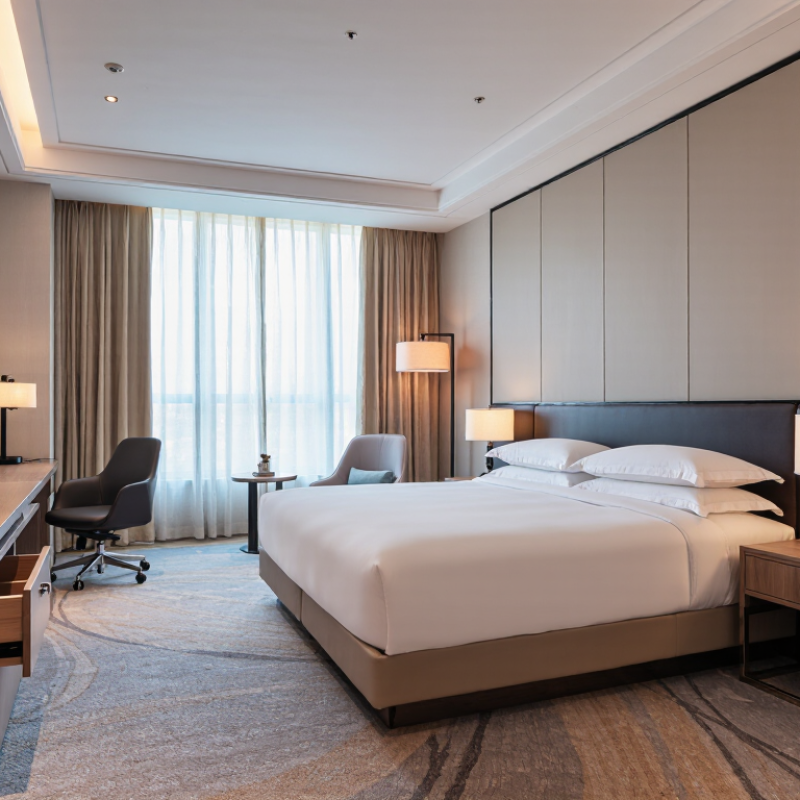
Assess Hotel Room Needs, Guest Profiles, and Space Constraints
Before choosing a hotel room furniture set, define the room’s actual use. A compact business room may need a desk, task lighting, and clear luggage space. A family room may benefit more from flexible seating and storage. Review booking patterns, average stay length, and guest feedback rather than relying on assumptions. Needs vary by property.
Tip: Measure the room, doorway, and lift before ordering. Note bed dimensions, wardrobe depth, and walking routes. A furniture plan should show where drawers open and where suitcases sit. Measure twice. A beautiful bedside table is less useful if it blocks the path to the bathroom.
Consider guest profiles alongside floor plans. Older travelers may appreciate reachable storage and stable chairs; remote workers need a usable work surface and nearby power access. For rooms serving different guest types, choose practical pieces that can adapt without overcrowding the space. Keep it simple. Check full-scale samples or mock-ups when possible, since drawings can hide awkward clearances. A little extra floor space often feels more welcoming than one additional furniture piece.
Hotel Room Furniture Planning: Example Floor Footprints
Compare the approximate floor area occupied by common furniture pieces when assessing room size, guest needs, and layout options.
Planning note: These are illustrative footprint estimates calculated from the example dimensions shown. They exclude access and circulation space; allow additional clearance for comfortable movement and adapt the layout to your room and guest profile.
Set Furniture Specifications, Budget, and Style Requirements
Set the room schedule before choosing finishes. Record bed size, bedside-table height, desk dimensions, wardrobe capacity, and required clearances. Specify materials, edge protection, hardware finish, and upholstery test results. Ask suppliers to state the test method; abrasion figures from different methods are not directly comparable. Small details matter. A drawer that catches a suitcase handle can frustrate guests every day. Approve a full-size sample room when possible, and check how warm lighting changes wood tones.
Build the budget around landed cost, not unit price alone. Include packing, shipping, assembly, spare parts, and replacement lead times. Keep a contingency for site measurements and finish variations; these are easy to underestimate. The U.S. Environmental Protection Agency’s ENERGY STAR building data report that certified commercial buildings use about 35% less energy than typical buildings. This is not furniture-specific, but it supports considering efficient lighting and durable, lower-impact room components together. Set a target price per room, then compare complete specifications against it. A refined look can still work on a modest budget, though matching every finish perfectly may not be worth the extra cost. Style boards should show actual fabric and wood samples beside the room’s lighting, not just screen images.
Evaluate Materials, Durability, Safety, and Regional Standards
Hotel-room furniture must handle suitcases, wet towels, and repeated cleaning, not just look polished. Inspect chair joints, bed-frame bolts, drawer runners, and veneer edges. Check the edges. Ask suppliers for test reports covering the exact model and finish, then compare them with the intended use. EN 16139 addresses strength, durability, and safety for non-domestic seating; ANSI/BIFMA X5.4 covers public and lounge seating. Confirm the applicable edition and destination-market requirements. A good-looking sample proves little. I would still question a smooth finish without traceable test records.
Material and fire performance also deserve scrutiny. NFPA’s 2021 report, Fires in U.S. Hotels and Motels, estimated about 3,900 hotel and motel structure fires annually during 2014–2018. Those fires caused an average of 15 civilian deaths, 100 injuries, and $100 million in direct property damage each year. This does not mean furniture caused these fires; it does show why documented fire performance and room-level risk review matter. Request relevant test documentation for upholstery and finishes, and verify that its scope matches local requirements. For composite wood, request emissions documentation where applicable, such as evidence aligned with U.S. TSCA Title VI requirements. Keep records by product and shipment. It is easy to overlook a regional mismatch when a sample looks identical.
Compare Global Suppliers, Production Capacity, and Lead Times
When comparing hotel-room furniture suppliers, request usable monthly output, not factory-wide capacity. A plant may list thousands of pieces yet have only one finishing line available for your project. Ask for recent production schedules, current order commitments, and a sample room set. Check whether bedside tables, wardrobes, and headboards share the same finish batch. Small color differences show under warm guest-room lighting.
Ask for proof. UN Tourism’s World Tourism Barometer reported about 1.4 billion international tourist arrivals in 2024, nearly 99% of 2019 levels. That recovery can tighten production slots in busy sourcing periods, so compare suppliers’ confirmed start dates and available capacity. UNCTAD’s Review of Maritime Transport 2024 notes that ships carry over 80% of world trade by volume. Sea freight therefore deserves a place in the schedule, not an afterthought.
Compare lead times by milestone: approved drawings, sample sign-off, production, inspection, packing, and port departure. Request separate estimates for standard and peak-season orders. Add time for replacement parts and inspection corrections; a neat spreadsheet can still hide optimistic assumptions. Dates matter. Confirm how the supplier reports delays, and whether cartons protect sharp furniture corners during stacking. No estimate is exact, and buyers should challenge unusually short promises. A missed delivery can leave rooms waiting on one unfinished wardrobe.
Plan Shipping, Installation, Quality Checks, and Long-Term Care
For a hotel room furniture set, shipping plans should include more than a delivery date. UNCTAD’s Review of Maritime Transport 2024 reports that global maritime trade grew 2.4% in 2023 and projects 2% growth for 2024. Port delays and route changes can still disrupt schedules. Allow time for customs processing, local delivery, and damaged-carton checks. Label each package by room and item, then match it against the packing list on arrival. Small labels save time during installation.
Inspect furniture before assembly. Check dimensions, finish, edge seams, hardware counts, and stability on a level floor. Photograph dents or missing parts before moving items upstairs. Ask suppliers for packing details and assembly instructions before shipment, not after a crew is waiting. No checklist catches every mismatch; that is worth admitting. Keep spare fasteners and a few touch-up materials on site.
Plan installation around room access, lift capacity, and the order of work. Protect floors before unpacking, and check wall materials before fixing headboards or storage units. For long-term care, record cleaning methods and inspect joints, drawer runners, and chair legs regularly. The U.S. EPA’s Advancing Sustainable Materials Management report recorded 12.1 million tons of furniture and furnishings waste in 2018. Repairing a loose joint early may extend service life, though maintenance logs are easy to neglect when rooms are busy.


