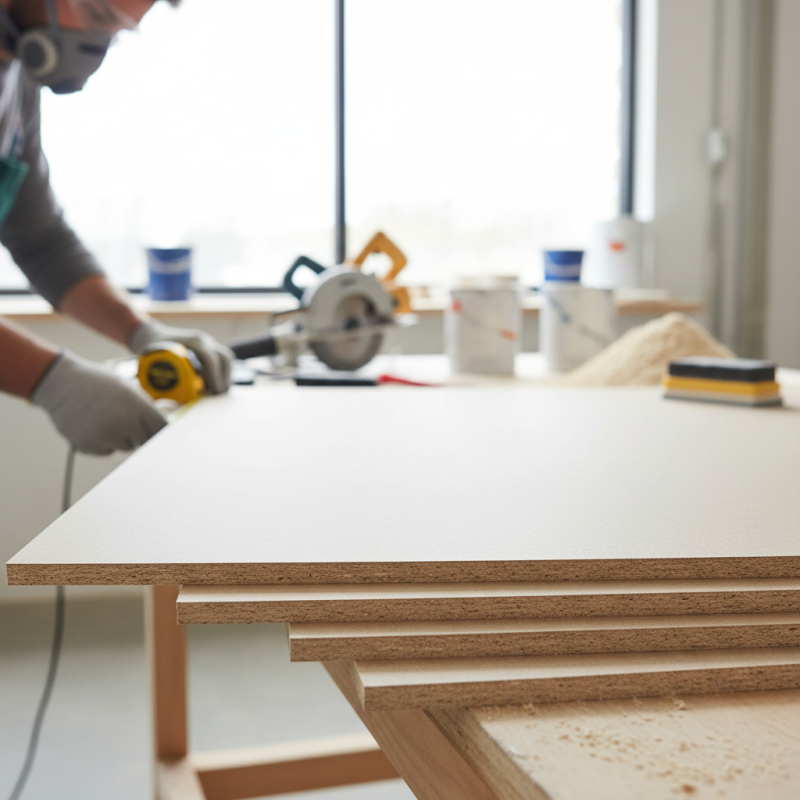
What is Fiberboard Medium Density Board and Its Benefits?
Fiberboard Medium Density Board is a versatile material widely used in construction and furniture manufacturing. It consists of wood fibers that are bonded together under heat and pressure. This process creates a strong yet lightweight product, making it ideal for various applications.
One notable aspect of Fiberboard Medium Density Board is its environmental benefits. It is often made from recycled wood fibers, reducing waste. Additionally, its smooth surface allows for easy finishing, enhancing aesthetic appeal. However, some may question its durability compared to other materials, like plywood.
Despite these concerns, Fiberboard Medium Density Board offers unique advantages. Its affordability makes it accessible for many projects. It can absorb sound, providing noise reduction in living spaces. For those seeking efficient building solutions, this material deserves attention.
What is Medium Density Fiberboard?
Medium Density Fiberboard (MDF) is a versatile engineered wood product. It consists of wood fibers, wax, and resin, which are combined and compressed. The result is a dense, sturdy board that can be machined easily. MDF is used in furniture, cabinetry, and decorative moldings. According to the Wood Products Council, MDF accounts for approximately 30% of the engineered wood market in North America.
MDF offers several advantages. Its smooth surface makes it ideal for painting and veneering. This feature allows for a variety of design options. Additionally, its uniform density means it doesn’t warp or split easily, even in challenging environments. A study by the Composite Panel Association highlighted that MDF’s stability can save time and costs in production, making it an appealing choice for manufacturers.
However, there are some considerations. MDF can release volatile organic compounds (VOCs), especially when cut or sanded. This may raise concerns regarding indoor air quality. Adequate ventilation and protective equipment are necessary during installation. Despite these issues, the balance of benefits often outweighs drawbacks. Many still regard MDF as a reliable solution in various applications.
Composition and Manufacturing Process of Fiberboard
Fiberboard, specifically Medium Density Fiberboard (MDF), is created through an intricate manufacturing process. The foundation consists of wood fibers, wax, and resin. These materials are bonded under heat and pressure. The result is a dense, solid board that offers versatile applications in furniture and cabinetry.
The manufacturing process begins with breaking down wood into fine fibers. These fibers are typically sourced from wood chips and sawmill waste. A combination of adhesives is added, followed by a drying phase. The mixture is then compressed into sheets. According to industry reports, over 5 million metric tons of MDF are produced annually across the globe. This volume underscores its popularity among manufacturers.
Despite its benefits, challenges exist. The production process consumes energy and resources. Additionally, the resins used may emit volatile organic compounds (VOCs) if not properly managed. However, many manufacturers aim to mitigate these issues by adopting eco-friendly practices. As a result, while MDF remains popular, ongoing improvements are essential for sustainability. Understanding the composition and manufacturing nuances is crucial for informed choices in the market.
Key Benefits of Using Medium Density Fiberboard
Medium Density Fiberboard (MDF) has become a staple in the woodworking industry due to its many advantages. According to recent data from the Wood Products Council, MDF accounts for over 35% of the global panel market. One key benefit of MDF is its excellent versatility. It can be easily machined, shaped, and finished, making it suitable for everything from cabinetry to decorative moldings.
Another significant benefit is MDF's smooth surface, which provides an ideal base for paints and veneers. The American Hardwood Information Center reports that this feature reduces the need for additional sanding and preparation. Additionally, MDF is free from knots and grain, ensuring a consistent finish.
However, as impressive as these benefits are, it's important to note that MDF can be susceptible to moisture. In environments with high humidity, the board can swell and lose integrity.
Moreover, while MDF is generally an eco-friendly choice because it's often made from recycled wood fibers, not all manufacturers adhere to the same sustainability standards. Some MDF products may contain harmful additives, which could pose health risks. Considering these factors is crucial for responsible usage in both residential and commercial applications.
Applications of Medium Density Fiberboard in Construction and Furniture
Medium Density Fiberboard (MDF) has gained popularity in the construction and furniture sectors. Its applications are extensive due to its versatility and affordability. In residential construction, MDF is a preferred choice for cabinetry and moldings. The material's smooth surface allows for easy painting and finishing. As a result, homes can achieve a polished look without the high costs associated with solid wood.
Reports indicate that the global MDF market is anticipated to grow at a CAGR of 5.2% from 2022 to 2028. This suggests an increasing demand for MDF in applications beyond traditional furniture production. Many furniture manufacturers utilize MDF for creating durable, modern designs that appeal to consumers seeking style and functionality. Additionally, its lightweight nature makes MDF easy to handle during manufacturing and installation.
However, despite its benefits, there are concerns regarding the emissions of formaldehyde, a component used in MDF production. It is essential for consumers and manufacturers to choose products that comply with safety standards. The focus on sustainability is pushing the industry toward lower-emission alternatives. This reflection on environmental impact highlights a significant area for improvement within the MDF manufacturing process. Balancing efficiency and safety remains a challenge.
What is Fiberboard Medium Density Board and Its Benefits? - Applications of Medium Density Fiberboard in Construction and Furniture
| Property | Description |
| Material | Wood fibers bonded together with resin |
| Density | Typically between 600 to 800 kg/m³ |
| Thickness | Available in various thicknesses, commonly between 6mm to 30mm |
| Applications | Furniture, cabinetry, flooring, wall panels, and acoustic applications |
| Benefits | Cost-effective, easy to work with, smooth surface for finishing, environmentally friendly options |
| Moisture Resistance | Moderate, typically requires additional treatment for high-humidity areas |
| Sustainability | Can be made from recycled wood materials, reducing waste |
Comparative Analysis: Fiberboard vs. Other Types of Wood Panels
Fiberboard, particularly Medium Density Fiberboard (MDF), is a favored choice in woodworking. It's created from wood fibers, bonded with heat and pressure. This process yields a dense, sturdy panel that is versatile and reliable. When comparing fiberboard to particleboard, fiberboard stands out due to its smooth surface and ability to hold hardware better.
Fiberboard performs well in various applications, including furniture and cabinetry. Its uniformity allows for precision cutting and finishing. Meanwhile, plywood, while strong, can be more prone to warping. Fiberboard's consistent quality makes it a preferred material for many projects. However, it is essential to note that fiberboard is less water-resistant compared to certain wood panels, which can lead to potential issues in humid environments.
Tips: When using fiberboard in high-moisture areas, consider sealing the edges. This simple step can enhance its durability. Another suggestion is to opt for high-density fiberboard for applications requiring more strength. Always evaluate the specific needs of your project when choosing between fiberboard and other wood panels.
Comparative Analysis of Fiberboard vs Other Types of Wood Panels