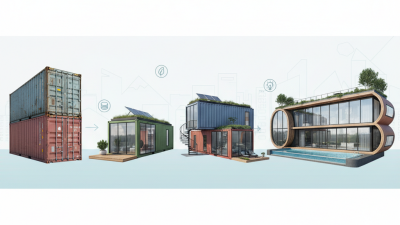
Converted container homes turn familiar steel boxes into compact residences, but a striking exterior is only part of the story. Buyers also need to consider insulation, ventilation, corrosion protection, layout, and delivery costs. In a sunny photograph, these details can disappear. In daily life, they matter.
The McKinsey report Modular Construction: From Projects to Products estimates that modular construction can shorten project timelines by 20 to 50 percent. That figure covers a broad construction method, not container homes alone, so it should not be treated as a guaranteed saving. The 2023 Global Status Report for Buildings and Construction, published by the UN Environment Programme and GlobalABC, says buildings accounted for 37 percent of global energy- and process-related CO₂ emissions in 2022. This wider context makes energy performance worth checking, even for a small home.
This guide presents ten converted container homes offered for sale in different parts of the world. It considers design, stated features, and practical questions a buyer should ask, including climate suitability and what the listed price includes. Availability and specifications can change, so confirm them directly with the seller before making decisions. A container shell may be reusable, but reuse alone does not prove a home is efficient or durable. That distinction is easy to overlook.
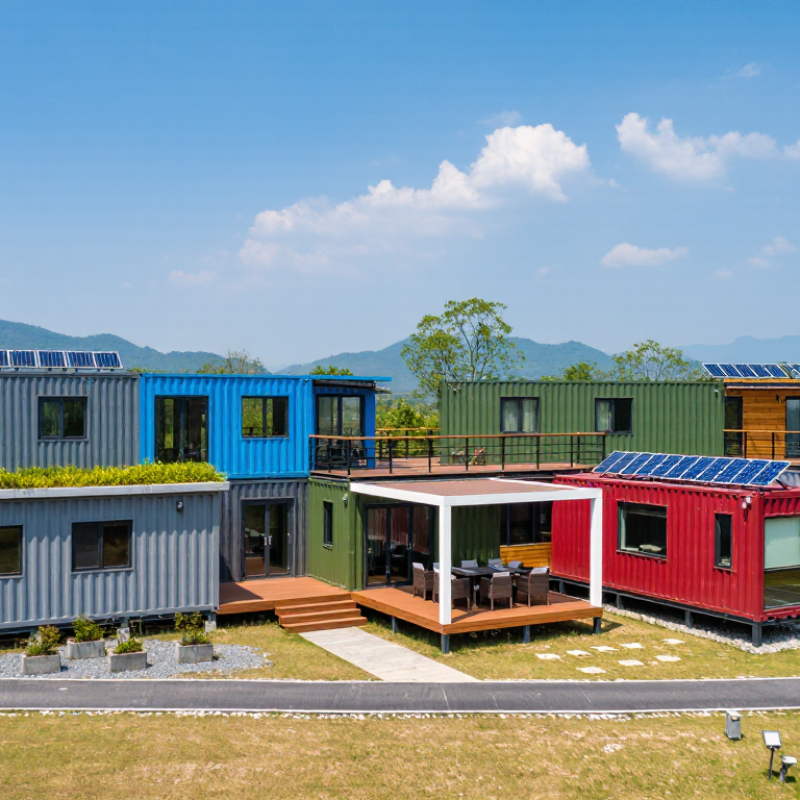
ISO 668 gives buyers a common dimensional reference for shipping containers. A standard 20-foot unit measures 6.058 metres long externally, while a 40-foot unit measures 12.192 metres. Both are typically 2.438 metres wide. These figures describe the container’s outside dimensions, not its living space.
That difference matters. Door frames, corner posts, and wall thickness reduce the usable interior width and length. A converted home may lose more space after insulation, interior lining, plumbing, and wiring are fitted. Measure carefully. A tape measure across a finished room can reveal less space than a listing suggests. ISO dimensions also help with transport planning and checking whether a unit suits a site, but they do not guarantee identical interiors across manufacturers or conversions.
Height needs attention, too. Standard-height containers are commonly about 2.591 metres tall externally; high-cube units are about 2.896 metres. Added flooring and ceiling finishes reduce headroom inside. Buyers comparing homes should ask for finished internal measurements, not rely only on the nominal 20-foot or 40-foot label. It is easy to underestimate how much a few centimetres matter beside a bed or kitchen counter. I would still want measurements verified on site; paperwork can be tidy while a conversion is not.
A converted container home is not automatically a compliant dwelling. Local building codes decide whether a listing can be occupied. The 2024 International Building Code addresses structural safety, fire separation, ventilation, and egress. Adoption still differs between cities and countries. Buyers should request stamped drawings, permits, and inspection records before paying a deposit.
Climate changes the risk profile. In humid coastal areas, cut steel edges and hidden welds need careful corrosion checks. In cold regions, thermal bridges can create condensation behind wall panels. Roof design must also handle local snow and wind loads under standards such as ASCE 7-22. ISO 1496-1 verifies freight-container performance, not residential comfort or long-term habitability. That distinction is often missed.
Look closely at the listing details. A sound home should show insulation thickness, drainage paths, foundation connections, and electrical certification. A crane-access plan matters when the house arrives on a narrow road. Small omissions become expensive.
UNEP’s 2023 Global Status Report states that buildings and construction used 34% of global energy in 2022 and produced 37% of energy-related and process emissions. Reusing steel can help, but inefficient heating, cooling, or poor airtightness may erase that benefit. I would still question attractive price claims without an independent structural engineer’s report. Fresh paint can hide old corrosion.
Converted container homes now appear in many property markets.
In California, a compact one-bedroom unit may cost $90,000–$160,000.
In Mexico, a studio with a shaded deck often ranges from $45,000–$85,000.
Portugal offers two-bedroom layouts near $120,000–$210,000.
Thailand’s smaller holiday-style homes usually sell for $35,000–$75,000.
Prices vary sharply.
In New Zealand, a two-container home with a kitchen and office can reach $140,000–$230,000.
Australian models with rainwater systems often range from $110,000–$200,000.
In the United Kingdom, insulated two-bedroom conversions may cost $130,000–$240,000.
South African homes with covered verandas commonly list between $55,000 and $110,000.
A Canadian four-season unit may require $160,000–$280,000.
German conversions, built for colder climates, often start near $180,000 and exceed $300,000.
Layout matters more than glossy photographs. Open kitchens save space, while sliding doors improve daylight and airflow. Proper insulation, moisture control, electrical certification, and foundation work deserve careful inspection.
Ask for structural reports and local planning approval. Measure twice. I would not trust unusually low prices without checking transport, utility connections, and site preparation.
Some homes look finished but lack practical storage. That weakness is easy to miss during a short viewing.
These ranges are indicative asking prices, not guaranteed final costs.
Top 10 Converted Container Homes for Sale Worldwide
Comparing container homes starts with usable floor area, not advertised size. ISO 668 dimensions show that a standard 20-foot unit usually provides about 13–14 square metres inside, while a 40-foot unit offers roughly 27–28 square metres. Wall thickness, bathrooms, kitchens, and insulation reduce that space further. A clever plan can feel comfortable. A poor one can feel narrow quickly.
Insulation deserves serious attention. The International Energy Agency’s 2023 Global Status Report states that buildings consume about 30% of global final energy and produce around 26% of energy-related emissions. Steel transfers heat rapidly, so buyers should request insulation type, thickness, thermal ratings, window specifications, and ventilation details. Utility comparisons must include electrical capacity, water connections, wastewater treatment, heating, and internet access. These items may be excluded from the advertised price. Delivery also needs careful checking. UNCTAD reports that ships carry over 80% of global merchandise trade, while freight prices can shift sharply by route, season, fuel, and port congestion.
Tips: Ask for a measured floor plan. Request a full utility schedule. Confirm crane access before ordering. Compare delivered cost, not factory cost. A remote plot may require road reinforcement or a larger crane, creating an unpleasant surprise. I would also treat energy estimates cautiously; real performance depends on climate, shading, and installation quality. The cheapest quote is rarely the clearest one.
Top 10 Converted Container Homes for Sale Worldwide attract buyers with compact designs and international appeal. However, a polished interior does not prove legal approval. Before paying a deposit, request the planning permit, approved drawings, occupancy certificate, and structural calculations. Confirm that the seller’s documents match the exact container home, not a similar model.
A CSC plate confirms a container’s transport-related inspection history. It does not automatically confirm residential safety or local building compliance. Check the plate number, manufacture date, inspection details, and any modification records. Ask an independent surveyor to inspect corrosion, welds, insulation, ventilation, electrical work, and foundation connections. Local rules may also control fire exits, energy performance, plumbing, and minimum room sizes. Requirements can vary between neighboring regions.
Tips: Contact the local planning office before signing anything. Ask for written confirmation about zoning, permitted use, setbacks, and utility connections. Keep copies of every document, including translations. A seller may sound certain, but confidence is not evidence. I would also budget for unexpected upgrades, because early estimates are often too optimistic. If the home will be shipped, confirm transport dimensions and handling requirements separately. A licensed local professional should review the final purchase, even when the paperwork appears complete.
Market-screening guide, not a live-listing directory. No individual homes or current sale prices are represented here; availability must be independently confirmed. Permit requirements depend on the exact site, intended use, and local authority. A CSC plate relates to shipping-container safety requirements and is not a building permit or proof that a container home complies with local building codes.
| # | Market to Search | Listing Status | Permit and Planning Checks | CSC Plate and Structure | Local Code and Site Checks |
|---|---|---|---|---|---|
| 1 | United States | Confirm current listings and land status directly; requirements vary by state and local jurisdiction. | Ask the local planning and building departments about zoning, land use, permits, and inspections before purchase or delivery. | Check plate details and container history; have cuts, joins, reinforcements, and corrosion assessed independently. | Verify applicable structural, energy, fire-safety, egress, foundation, utility, and site requirements locally. |
| 2 | Canada | Availability is not verified; confirm the property location and the authority having jurisdiction. | Check municipal zoning and building-permit requirements, plus any provincial or territorial rules that apply. | A CSC plate does not certify suitability as a dwelling; request engineering review of alterations and support conditions. | Confirm locally applicable structural, insulation, ventilation, fire, snow-load, foundation, and servicing requirements. |
| 3 | United Kingdom | Treat any advertised unit as unverified until its location, condition, and sale terms are confirmed. | Ask the local planning authority whether planning permission is required; building-regulations obligations are a separate check. | Inspect the CSC plate and records where relevant, and obtain a structural assessment of conversion work. | Check applicable fire safety, insulation, ventilation, drainage, access, and foundation requirements with the relevant authority. |
| 4 | France | No live sale is asserted; verify the seller, installation address, and proposed use independently. | Consult the local planning authority and applicable local planning documents; required formalities depend on the project. | Request plate and modification records, but do not treat them as approval for residential use or structural compliance. | Confirm applicable construction, energy, fire, sanitation, utility-connection, and site constraints for the intended use. |
| 5 | Germany | Confirm that a specific unit is genuinely available and that the intended site permits the proposed use. | Check with the responsible local building authority; building rules and procedures are administered at state level. | Verify container identification and records; obtain qualified review of structural changes, lifting points, and foundations. | Ask about applicable energy, fire, structural, access, utility, and land-use requirements before committing. |
| 6 | Netherlands | No specific home or seller is verified; confirm current availability and the exact installation site. | Use the relevant municipal authority and official planning information to establish whether a permit or other approval is needed. | Check plate information where applicable and commission an inspection of corrosion, insulation, and structural modifications. | Verify applicable building, fire, energy, foundation, water-management, and service-connection conditions for the site. |
| 7 | Australia | Treat sale availability as unconfirmed; planning and building pathways differ between states, territories, and councils. | Contact the relevant local council and building authority about planning approval, building approval, and site-specific conditions. | A shipping plate is not residential certification; have structural changes and transport or installation loads assessed. | Check applicable wind, bushfire, energy, fire, sanitation, foundation, and utility requirements for the location. |
| 8 | New Zealand | No live unit is claimed; verify availability, land access, and intended residential use before arranging delivery. | Ask the local council whether building consent, resource consent, or other approvals apply to the specific proposal. | Inspect container condition and modification records; obtain a competent structural assessment for the proposed site and use. | Confirm applicable building, seismic, weather-tightness, fire, access, foundation, and wastewater requirements. |
| 9 | Japan | Confirm that a specific converted unit is for sale and that it can lawfully be installed at the intended location. | Consult the local authority and a qualified local professional about building confirmation procedures and land-use restrictions. | Do not rely on a CSC plate as building approval; review structural changes, corrosion, and earthquake-related design considerations. | Check applicable structural, fire, insulation, access, foundation, utility, and site-specific hazard requirements. |
| 10 | South Africa | Availability is not verified; confirm the seller, title or site rights, delivery access, and intended use. | Consult the municipality about land-use zoning, building-plan approval, and any other local permissions required. | Check the container’s identity and condition; obtain qualified assessment of alterations, support, and anchoring. | Verify applicable building, fire, ventilation, sanitation, foundation, utility, and environmental requirements locally. |
Buyer check: Standard freight-container dimensions are commonly about 6.06 m long for a 20-foot unit and 12.19 m for a 40-foot unit; actual dimensions vary by container type and manufacturer. Before purchase, request measured drawings, a condition report, alteration and materials records, permit documentation for any existing installation, and written confirmation of the intended site’s approval pathway.