For global buyers, finding reliable China small umbrella manufacturers requires more than comparing factory prices. A dependable supplier should demonstrate consistent production, clear communication, and practical quality controls. The best Small Umbrella partners usually provide product samples, material details, packaging options, and transparent lead times before large orders begin.
A compact umbrella may look simple, yet its performance depends on several details. Buyers should examine canopy fabric, frame strength, handle comfort, automatic opening systems, and closure alignment. A 21-inch model should open smoothly and remain stable during ordinary city rain. Factory audits can reveal stitching quality, warehouse conditions, and whether inspection procedures are genuinely followed. Ask for carton dimensions, gross weight, minimum order quantities, and replacement policies. These figures affect shipping costs and customer satisfaction.
Experience also matters when products serve different markets. Some manufacturers support private labels, custom colors, logo printing, and retail-ready packaging. Others may be better suited to promotional orders or large-volume distribution. Product testing should include repeated opening cycles, water resistance checks, and basic wind performance assessments. No supplier is perfect. Even polished samples can hide production inconsistencies. That is why staged orders, written specifications, and pre-shipment inspections remain sensible safeguards. This guide reviews leading Chinese manufacturers through practical purchasing criteria, not advertising claims. It considers manufacturing capability, customization, communication, quality evidence, and export experience. The goal is simple: help global buyers select a Small Umbrella supplier with fewer surprises and more dependable results.
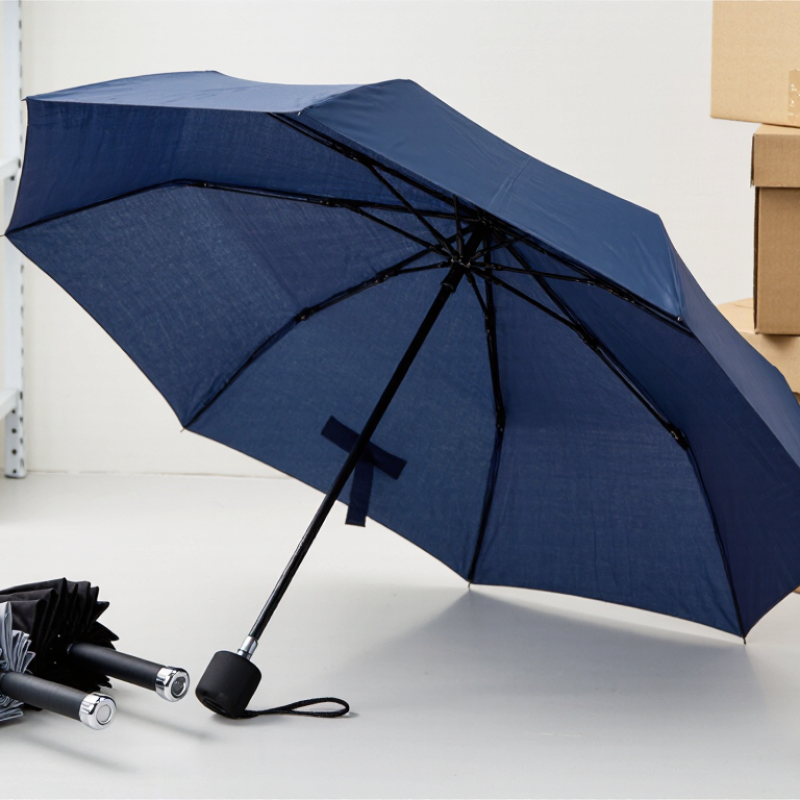
Small umbrellas serve different needs, and the right design depends on daily use, weather, and storage space. Folding models fit easily into handbags, office drawers, and vehicle consoles. Their compact frames usually use several joints, so hinge quality matters. Buyers should inspect rib alignment, shaft movement, and canopy tension before placing large orders.
Manual umbrellas offer simple handling and fewer moving parts. They suit schools, commuters, and promotional distribution where easy maintenance is important. Automatic models open with one press, which helps users carrying shopping bags or phones. However, their springs and release buttons require careful testing. A smooth opening action is useful, but a strong closing force can surprise children or older users.
Travel umbrellas need a different balance. Low weight matters, yet very thin frames may struggle in strong wind. A practical model may include a reinforced shaft, a secure wrist strap, and a ventilated canopy. Water-repellent polyester can shorten drying time after a wet commute. Manufacturers should check opening cycles, stitching strength, handle comfort, and packed size during quality inspections. Factory samples often feel better than mass production. That gap deserves attention. No model is perfect. A buyer who records failure details can improve later orders, rather than trusting appearance alone.
A comparison of common non-branded umbrella formats used by global buyers. Measurements represent typical market specifications in centimeters.
Folding and travel umbrellas prioritize portability with shorter closed lengths, while automatic folding models generally provide a larger canopy and more convenient one-hand opening. Manual stick umbrellas offer the longest handle and typically the widest coverage.
China Top Small Umbrella Manufacturers for Global Buyers?
China’s HS 6601 umbrella trade offers a practical view of export performance. Export value shows the total customs value in U.S. dollars. Export volume counts shipped units. These measures can move differently.
A rising value with flat volume may indicate higher prices, improved materials, or a larger share of premium products. Higher volume with slower value growth can suggest stronger price competition. For global buyers, this distinction matters when comparing factory quotations. A small producer may offer compact folding umbrellas, children’s umbrellas, or manual travel models with different cost structures.
The five-year CAGR helps measure longer-term direction. The standard formula is: CAGR = (final value ÷ initial value)^(1/5) − 1. Buyers should calculate it separately for value and volume. A positive value CAGR but weak volume CAGR deserves closer inspection. It may reflect inflation, currency changes, or product upgrades rather than real demand growth.
HS 6601 data can be checked through customs databases and trade-statistics platforms. Yet the numbers are not perfect. Reporting delays, revised records, and product classification differences can affect comparisons. Unit counts may also hide differences in size and construction. That is a weakness.
Experienced sourcing teams should combine trade data with factory audits, sample testing, production capacity, and shipment records. Ask for carton dimensions, packing details, canopy materials, frame specifications, and monthly output. Export statistics show market movement. They do not prove every supplier’s reliability.
China Top Small Umbrella Manufacturers for Global Buyers?
A capable small umbrella manufacturer should explain MOQ, monthly capacity, and lead time clearly. Typical MOQs may range from 500 to 3,000 pieces per design. Custom handles, printed panels, and special packaging usually increase the minimum order. Ask for a written production schedule, not only a sales estimate. A factory producing 80,000 to 200,000 umbrellas monthly may support repeat orders, but available capacity can change during rainy-season demand.
Lead time often falls between 25 and 45 days after sample approval and deposit confirmation. This period should include fabric preparation, frame assembly, inspection, and packing. Request recent production records or time-stamped factory photos when possible. Details matter.
AQL 2.5 provides a practical inspection benchmark for general defects. It does not mean every umbrella will be perfect. Buyers should define critical, major, and minor defects before production. Inspectors may check folding action, rib alignment, canopy stitching, handle strength, and carton counts. A random inspection based on an agreed sampling plan is more reliable than checking only the first cartons. In real sourcing work, spreadsheets sometimes look convincing while capacity evidence remains weak. That gap deserves attention. Factories should also explain how they handle failed inspections, rework, and shipment delays without vague promises.
China’s small umbrella manufacturers serve global buyers with compact products, but material claims need careful checking. Canopy GSM shows fabric weight per square meter. It can suggest density and coverage, yet higher GSM does not always mean better performance. Coating quality, yarn structure, stitching, and frame balance also matter.
During supplier evaluations, request the exact fabric specification and a recent laboratory report. Confirm the test method, sample date, and production batch. For wind resistance, controlled testing should record wind speed, opening condition, frame damage, and recovery after stress. A “windproof” label alone is too vague. In practice, a canopy may survive a short gust but fail after repeated exposure. That detail is easy to miss.
UPF 50+ should come from recognized ultraviolet protection testing, not a printed claim. Ask whether the rating applies to new fabric only, and whether moisture, stretching, or washing changes results. Dark coatings may improve protection, but they can affect heat and ventilation. Small umbrellas need a practical balance. I would also inspect seam tape, rib joints, handle strength, and closing force. Some samples look excellent. Their bulk production may not. Pre-shipment inspection and batch-level records reduce that uncertainty, although they cannot remove it completely.
Global buyers judge small umbrella manufacturers by evidence, not attractive catalog photos. A serious evaluation starts with product samples, factory communication, and repeatable quality records. Measure the closed length, canopy diameter, shaft alignment, and handle grip. For travel umbrellas, a folded size near 15 centimeters can affect retail packaging and shipping efficiency. Do not ignore small defects.
Experienced buyers request samples from the same production line used for bulk orders. They inspect 190T polyester fabric, stitching density, rib joints, opening force, and water-shedding performance. A controlled spray test is useful, but it is not a complete wind test. Ask for documented testing conditions, inspection photographs, and clear acceptance standards. Vague promises create expensive surprises. Reliable manufacturers explain their limits instead of promising an “unbreakable” umbrella.
Professional sourcing teams also review production capacity, material traceability, lead times, carton protection, and response speed. A small order can reveal much. Are color samples accurate? Are labels packed correctly? Can the supplier report defects honestly? Fast replies do not always mean strong manufacturing control. A missed inspection detail can matter more than a polished sales presentation. Before approval, compare pre-production samples with shipment samples and record every change in writing. The best decision is rarely the cheapest offer. It is the supplier with evidence, consistency, and enough humility to improve.
| Evaluation Dimension | Typical Compact Umbrella Benchmark | What Global Buyers Verify | Preferred Evidence or Test Method | Buyer Assessment |
|---|---|---|---|---|
| Closed Length | Approximately 20–30 cm for a standard compact manual or automatic umbrella. | Whether the folded size fits retail packaging, handbags, backpacks, and travel luggage. | Measure a production sample from handle end to tip with the umbrella fully closed. | Compact Format |
| Open Canopy Diameter | Approximately 90–105 cm for a personal-use compact umbrella. | Coverage relative to the folded size and intended end-user segment. | Measure the straight-line canopy span from edge to edge after full opening. | Personal Coverage |
| Product Weight | Approximately 250–400 g for a compact umbrella with a metal or mixed-material frame. | Portability, shipping weight, handle comfort, and suitability for promotional or travel use. | Weigh finished goods with sleeve, strap, and standard accessories included. | Travel-Friendly |
| Frame and Rib Structure | Common compact designs use 6–8 ribs; fiberglass and steel are widely used frame materials. | Flexibility, corrosion resistance, joint strength, and recovery after wind deformation. | Review material declarations and perform repeated opening, closing, and inversion tests. | Durability Check |
| Water Repellency | Rainwear fabric should show effective water beading with minimal visible wetting after testing. | Whether the canopy maintains repellency after laundering, abrasion, and repeated use. | Use AATCC 22 spray test or an equivalent recognized textile water-repellency method. | Test Required |
| Water Resistance | Performance should be specified by hydrostatic-pressure or equivalent rain-penetration results rather than by a generic claim. | Suitability for the target climate, product category, and retailer performance requirements. | Request laboratory results based on ISO 811 or another agreed water-pressure test method. | Specification-Based |
| Sun Protection | UPF 30–50+ is commonly requested for sun umbrellas; the rating depends on fabric construction and color. | Whether the claimed UPF level applies to the finished canopy, not only to the base fabric. | Request a finished-product UV test based on a recognized standard such as AS/NZS 4399 or equivalent. | Verify Claim |
| Opening and Closing System | Manual, automatic-open, and auto-open/auto-close mechanisms are common compact formats. | Operating force, pinch-point safety, smoothness, button reliability, and mechanism life. | Conduct cycle testing using an agreed number of open-close operations and record failures. | Function Tested |
| Wind Performance | Wind resistance varies by frame design; no universal wind-speed rating should be accepted without a defined test. | Canopy recovery, rib deformation, runner stability, and handle or shaft damage. | Use a documented wind or inversion test with specified speed, duration, sample size, and pass criteria. | Protocol Needed |
| Canopy Fabric | Polyester is widely used; higher-density fabrics and recycled polyester options are also available. | Fabric weight, weave consistency, colorfastness, coating quality, and seam construction. | Check fabric specification sheets and test colorfastness, seam strength, and coating adhesion. | Material Traceability |
| Chemical and Market Compliance | Requirements depend on destination market, product materials, packaging, and sales channel. | Restricted substances, heavy metals, azo dyes, packaging obligations, and product labeling. | Request current third-party reports and declarations aligned with applicable regulations, including REACH where relevant. | Market-Specific |
| Quality-Control Process | Reliable production control normally covers incoming materials, in-process inspection, final inspection, and carton checks. | Inspection frequency, defect classification, traceability, corrective-action procedures, and production records. | Review inspection checklists, sample reports, defect limits, and an agreed AQL inspection plan. | Process Verified |
| Customization Capability | Common options include canopy printing, handle colors, sleeve design, hangtags, labels, and gift packaging. | Artwork accuracy, color consistency, sampling speed, tooling requirements, and intellectual-property handling. | Approve a pre-production sample and compare artwork, Pantone references, dimensions, and packaging details. | Sample Approval |
| Packaging Efficiency | Compact umbrellas are commonly packed in individual sleeves or boxes and then consolidated into export cartons. | Retail presentation, moisture protection, carton durability, dimensional weight, and pallet utilization. | Check carton drop resistance, carton dimensions, gross weight, packing ratio, and barcode placement. | Shipping Ready |
| Lead-Time Reliability | Lead time depends on customization, order quantity, fabric availability, production loading, and inspection requirements. | Ability to provide a realistic production schedule and communicate changes before shipment risk occurs. | Compare quoted lead time with documented performance on recent purchase orders or trial production. | Track Record |
| Export Documentation | Commercial shipments generally require accurate commercial invoices, packing lists, transport documents, and origin information where applicable. | Document accuracy, HS-code coordination, carton marks, and destination-market labeling support. | Review a redacted document pack from a comparable shipment before placing a large order. | Documentation Check |
| Total Cost of Ownership | Purchase price is only one component; testing, packaging, tooling, freight, inspection, defects, and warranty claims also affect total cost. | Whether the quoted price remains competitive after all compliance and logistics costs are included. | Build a landed-cost model using the same specifications, Incoterm, quantity, packaging, and inspection scope. | Landed-Cost Review |