What Is 430 Stainless Steel Strip and Its Uses?
430 Stainless Steel Strip is a ferritic stainless steel product valued for its balance of cost, corrosion resistance, and practical performance. It typically contains chromium as its main alloying element, with very little carbon and no intentional nickel addition. This composition gives the strip a clean metallic appearance and useful resistance to oxidation in many indoor and mildly corrosive environments.
In manufacturing, the strip is produced through rolling, annealing, pickling, and slitting processes. Its thickness and width can be controlled for specific forming or fabrication needs. The material is commonly supplied in coils, allowing efficient use in stamping and continuous production lines. It also offers magnetic properties, which may matter in appliance parts, decorative components, and selected industrial assemblies. However, forming behavior depends strongly on thickness, temper, tooling, and surface condition. Small process differences can change the result.
Typical uses include kitchen equipment, appliance panels, automotive trim, sinks, exhaust components, fasteners, and architectural details. Its bright surface can resemble polished chrome, but the two materials are not equivalent. 430 Stainless Steel Strip is often chosen where moderate corrosion resistance and a lower material cost are more important than extreme toughness. It performs well in many dry or mildly humid settings. It is not an ideal choice for marine exposure, strong chemicals, or demanding welded structures. No material is perfect. Careful evaluation of temperature, moisture, cleaning agents, and forming requirements remains essential before selection. Reliable suppliers should provide dimensional tolerances, surface condition, chemical data, and relevant test documentation.
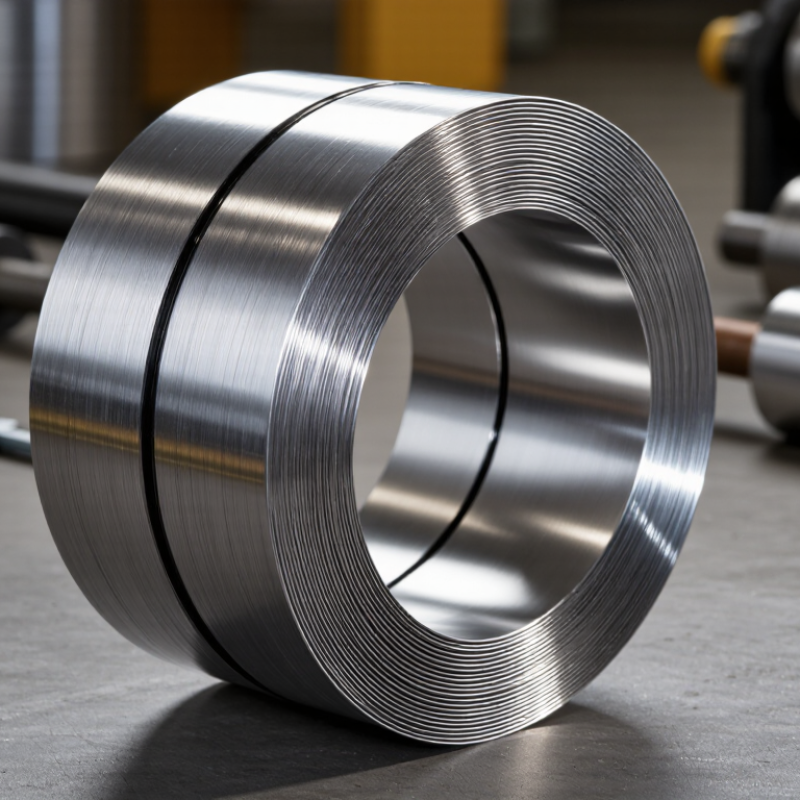
What Is 430 Stainless Steel Strip?
What Is 430 Stainless Steel Strip and Its Uses?
430 stainless steel strip is a ferritic, chromium-based alloy supplied in narrow, coiled widths. It usually contains 16–18% chromium and very little nickel. This chemistry makes it magnetic, unlike common austenitic grades. It also provides useful resistance to oxidation and mild atmospheric corrosion. ASTM A240 commonly limits carbon to 0.12%, although mill chemistry can vary. Check the certificate.
Manufacturers typically cold roll, anneal, pickle, and slit the strip to its required width. A 2B surface suits many formed components. Bright-annealed finishes offer a cleaner appearance. Its density is about 7.7 g/cm³, while its thermal conductivity exceeds many austenitic grades. Fabricators often appreciate its magnetic handling. Deep drawing is less forgiving, however. Sharp bends may cause problems when grain direction and tooling are ignored.
Common uses include appliance panels, exhaust trim, kitchen equipment, shelving, and decorative interiors. It performs best indoors or in low-chloride environments. Coastal air, salt spray, and trapped moisture require greater caution. The International Stainless Steel Forum reported global crude stainless production of about 58.4 million tonnes in 2023. That figure shows market scale, not universal suitability. The U.S. Geological Survey also identifies chromium as essential to stainless steel production. 430 remains practical, but application testing should not be skipped.
What Is 430 Stainless Steel Strip and Its Uses?
430 stainless steel is a ferritic, chromium-bearing stainless steel commonly supplied as cold-rolled strip. Its composition provides good corrosion resistance, magnetic behavior, and useful formability for indoor and mildly corrosive environments.
The chart shows typical maximum composition limits for UNS S43000 stainless steel under ASTM A240 specifications. Chromium is the principal alloying element, while nickel is kept low compared with austenitic stainless steels. Common applications include appliance trim, kitchen equipment, automotive interior components, architectural panels, and decorative metalwork.
Key Properties and Performance Characteristics
What Is 430 Stainless Steel Strip and Its Uses?
Key Properties and Performance Characteristics
430 stainless steel strip is a ferritic stainless steel with a chromium content commonly near 16–18%. It is magnetic and offers useful resistance to oxidation, moisture, and mild atmospheric exposure. Its low carbon structure supports stable performance during ordinary service. However, it is not a universal corrosion solution. Chloride-rich water can still cause staining or pitting.
In practical fabrication, 430 strip is valued for its smooth surface, moderate strength, and reliable dimensional consistency. It is often formed into appliance panels, automotive trim, exhaust components, kitchen equipment, and decorative interior parts. Cold working can improve strength, but excessive forming may reduce ductility and create unwanted distortion. It cannot be hardened through conventional heat treatment. Welding also requires care because heat-affected areas may lose some corrosion resistance. Surface finish and cleaning methods matter more than many users expect.
Tips: Match the grade to the environment. Check thickness, hardness, and surface finish before production. For outdoor or salty conditions, test samples first. Small design changes can prevent costly failures. That step is easy to skip.


